We by Yevgeny Zamyatin is a novel written at the beginning of the future.
It’s hard to remember today, after Logan’s Run, The Handmaid’s Tale and Hunger Games made “dystopia” an entertainment genre, but when Yevgeny Zamyatin was writing in the early 1920s, it was only beginning to dawn on humanity just how bad the future might be.
Or how splendid.
Watch the full video essay
Zamyatin’s science fiction novel invented the future we now think of as dystopia. A lone individual awakens to the oppressive system they are trapped within and attempts a rebellion. Sometimes they achieve liberation, but mostly they…do not. The details change, the dystopian future remains the same.
For most of human history there was no future. There was a date at a point ahead in time. But that date would be much like this date. Time was cyclical. Kings came and went, but there was always a king. The apocalypse or armageddon might strike, but those brought the end, not the future.
The future needs progress. Progress needs technology.
And technology needs science.
With the explosion of science and technology during what we call the Industrial revolution progress began to accelerate to rates perceptible within a human lifetime. And then far faster.
The future came into focus.
Through science fiction.
Philosophers, intellectuals and scientists began to speculate on what the human future might look like. From Johannes Kepler’s Somnium to Mary Shelley’s Frankenstein, science fiction made new myths for new times.
At the heart of these speculations was the belief that the future could be made better with science and technology.
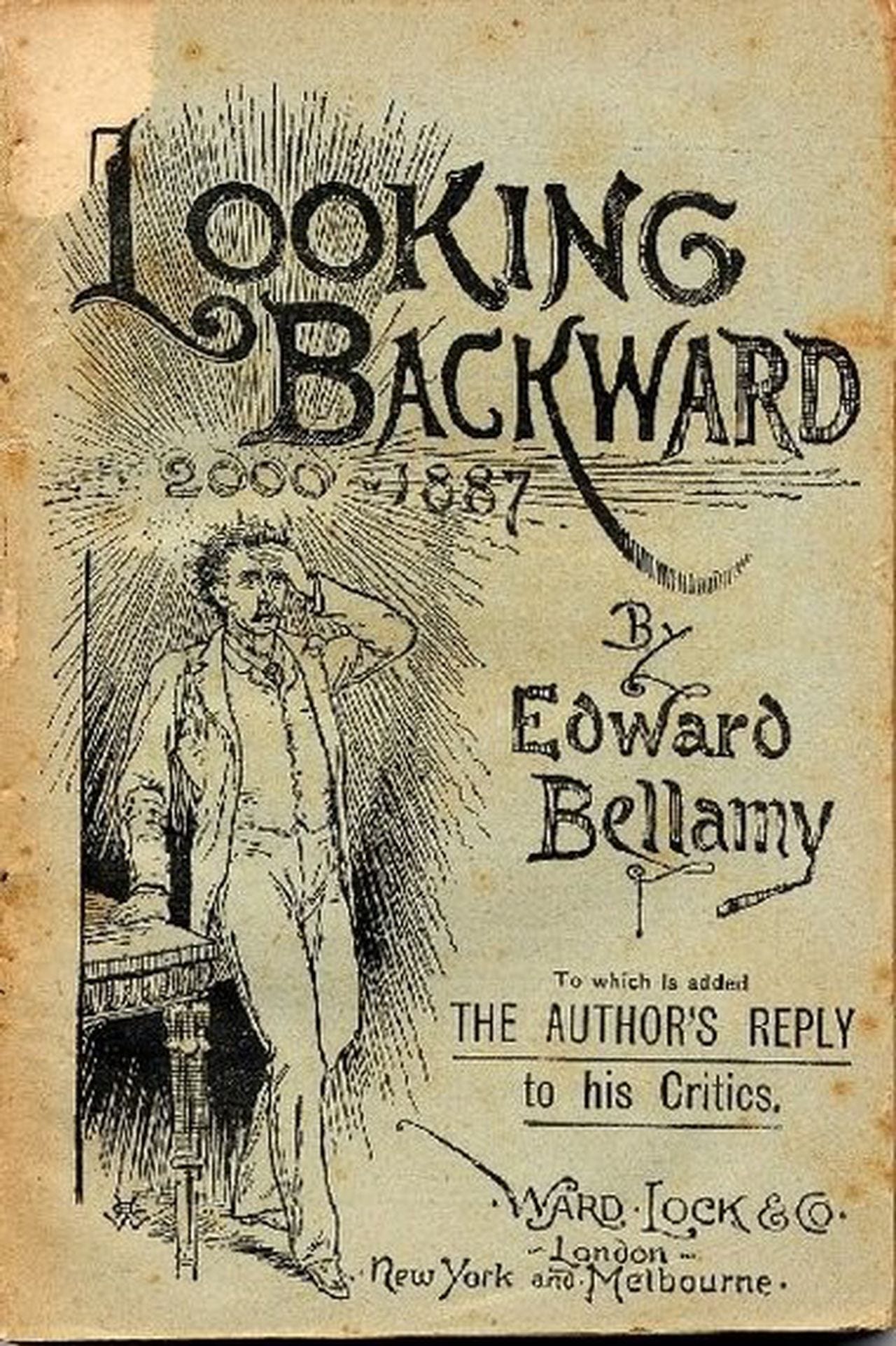
Early science fiction like Edward Bellamy’s Looking Backward, Charlotte Perkins Gilman’s Herland and A New Amazonia by Elizabeth Burgoyne Corbet imagined futures of high technology and human equality, made possible with science and technology.
Utopias were the standard for early science fiction. It may surprise us now but optimistic visions were once the scifi standard. Such stories caught the imagination of ordinary people and gave birth to “utopian socialism”.
The dreams of early utopian socialism were bound up with the experience of early industrial capitalism. The workers in the factories could see the abundance their machines created. If that abundance were just shared fairly, not given away to the capitalists, a better world would surely be possible?
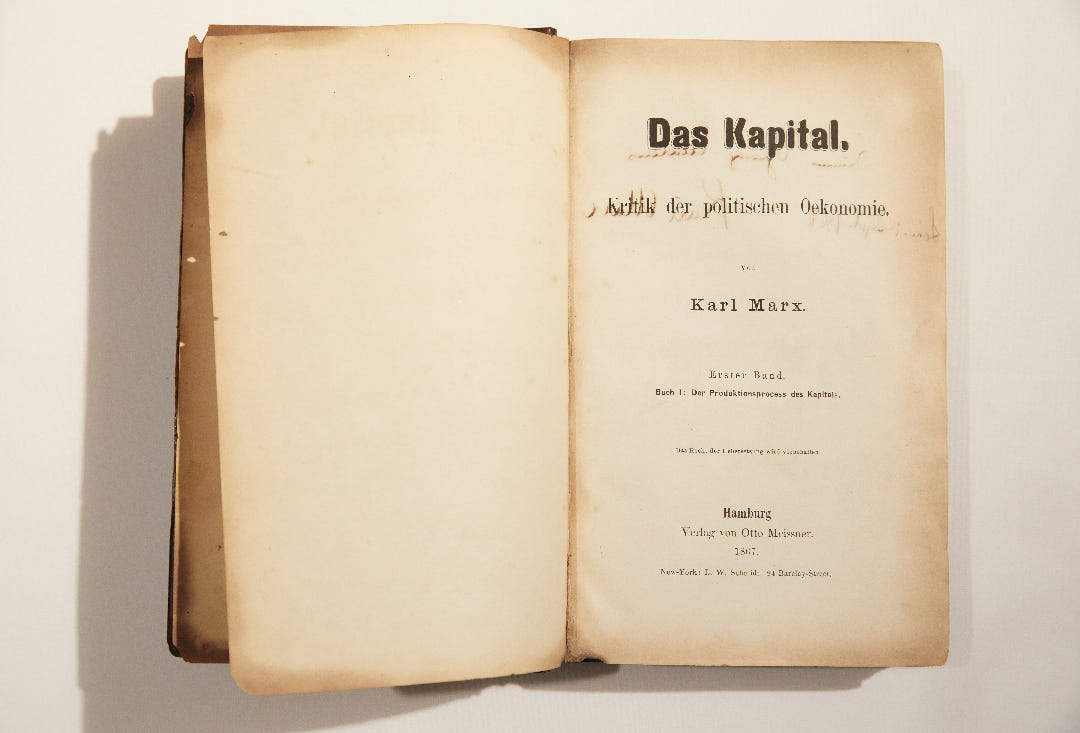
These dreams were given a basis in logic and reason with the “historical materialism” of Karl Marx. In his critique of capitalism, Das Kapital, Marx claimed a scientific model of human progress, persuading millions that the future could be shaped by mankind as a better world, with the power of “scientific socialism”.
So, as Yevgeny Zamyatin wrote We in 1921/22, he was reflecting on the decades-long dream of both utopian and scientific socialism that had suddenly become a reality.
The chaos of World War One had sparked the revolution in Russia, and the communist Bolsheviks lead by Vladimir Lenin were, at least in name, intent on making the dream of socialist utopia a reality.
The future long dreamed of had finally begun.
And went instantly and horrifyingly wrong.
Yevgeny Zamyatin was a revolutionary against the Russian Tsars who was arrested, tortured and imprisoned multiple times. We was written by a committed revolutionary to the socialist cause, who came very quickly to see that the revolution was going to succeed in creating a scientific socialist utopia.
And that it would instantly become a dystopia.
We was rejected for publication then became the first book banned by the Soviet state in the early 1920s. It was published in America in 1924 and from then on Zamyatin was persecuted by the Glavlit censorship board, until his exile in 1931 and then death in 1937.
But even after its US publication, We did not find an enthusiastic readership. The primary audience of educated elites and intellectuals who might have read and promoted We were still too infatuated with visions of scientific socialism to entertain any critique of the socialist utopia.

It was not until the wake of World War 2, as the US and Europe faced a heavily militarised Soviet Union, that the Western world found it needed reasons to hate its former ally, and We was “discovered”.
It’s now well known that George Orwell’s 1984 was to some extent influenced by We. Orwell thought it “not a work of the first order” but “certainly an unusual one”.
Orwell’s assessment of We is both accurate and biased. Its true that We is a didactic, one sided argument against scientific socialism. Orwell in 1984 sought to critique the Societ Union while retaining his argument first articulated in Animal Farm, that the socialist dream was possible, but had been subverted by the “pigs” of the oligarchy.
It’s also unclear just how much of an influence We was on 1984. Orwell’s more direct influences were HG Well’s socialist utopias like Things To Come, which Orwell perceived as proto-fascistic, and Aldous Huxley’s Brave New World, which Orwell believed must have been influenced by We.
But Zamyatin’s We was, inarguably, the book which defined the dystopia of totalitarian control as the primary vision of socialism in the Western imagination. The dreams of utopian socialism were displaced by the dystopia of totalitarian socialism.
It’s no exaggeration to say that We was the book which destroyed the socialist dream.
So the value of We to today’s reader is in the asking and answering of this question: Is the socialist dream of a better world fundamentally delusional and corrupt? Or has it only been corrupted by the pigs?
Zamyatin weaves three symbolic threads into his fiction which can help us to find answers.
The first is the One State. Those early utopian socialist scifi visions had tended to imagine a socialist future of decentralisation and anarchy.
But Marx’s scientific socialism believed the state, controlled by the “dictatorship of the proletariat”, was the only institution powerful enough to make the socialist dream a reality
Zamyatin was among the first to see that the state, acting in the name of the people, would simply replace traditional social hierarchy with crushing social conformity.
We’s central critique of socialism is right there in the title. If you’ve heard right wing reactionaries like Jordan Peterson rail against “collectivism” then We is where that all started. Solzhenitsyn did it better, but Zamyatin did it first.
The Green Wall in We is a transparent barrier that separates the people of the One State from nature.
We moderns in our air conditioned condos and hermetically sealed shopping malls can instantly feel the pang of this separation.
Utopian socialists of today, captured in the visions of Solarpunk, dream of an idealised return to nature. Industry is now the enemy of socialism.
But for the largely peasant peoples of pre-Industrial Russia the idea of a world where you didn’t have to fight nature for every scrap was a major appeal of socialism.
Zamyatin saw that scientific socialism would leverage our impossible desire to escape nature as a tool of control. To escape hunger we would accept industrial agriculture. To escape sickness we would accept the medical industrial complex. To tame nature, more and more control would be centralised into the One State.
Zamyatin couldn’t have known the strange echoes his starship Integral would decades later conjure for readers.
Construction of the Integral is led by We’s central character, the snappily named D-503. Combined with the Integral’s mission to “subjugate to the grateful yoke of reason” all other life in the universe, it’s hard not to imagine the ship as a vast…cube

Of course it’s possible that the writers of Star Trek :The Next Generation were directly inspired by Zamyatin when writing conceiving Borg and its mission to “assimilate all life” in the face of which “resistance is futile”.
But it’s equally likely that the writers of Star Trek, when they decided to parody socialism in that tv show, arrived independently at the same conclusion as Zamyatin. That the logical fate of a society based on scientific socialism would be absolute totalitarian submission of all life to the collective.
And to the machine.
Science fiction has warmed of one future again and again. From EM Forster’s The Machine Stops to Arnie as The Terminator. From the Death Star to The Matrix, science fiction warns us of the machine.
The machine dominating and controlling the human is the central image of 20th century science fiction.
For Zamyatin this machinic domination is an expression of the terrors of the collective, and the inevitable outcome of the attempt to build a socialist utopia with the power of science and technology.
But.
Here in the capitalist Western world of the 21st century, swaddled in the concrete and steel of our cities, consuming the products of fully automated dark factories, being behaviour shaped by algorithms while AI automates our jobs, as we watch androids dance bebop…
…we can hardly claim to be raging against the machine.
Which somewhat cracks apart Zamyatin’s critique of utopian socialism.
The pathologies Zamyatin identifies in socialism — the crushing power of the state, the separation from nature, the Borg-like conformity, and the transformation of the human into the machine — would all manifest in every other political system as the 20th century unfolded.
If Zamyatin’s We falls short of the greatest science fiction it is because its critique of scientific socialism blames our utopian dreams for the dystopian failings of science and technology.
A hundred years later it seems clearer and clearer that the failure of our utopias was not caused only by the hyper-collectivism of socialism and too much We, but also by the erosion and collapse of our societies caused by hyper-individualism, a sickness of far, far too much I.
 Damien Walter