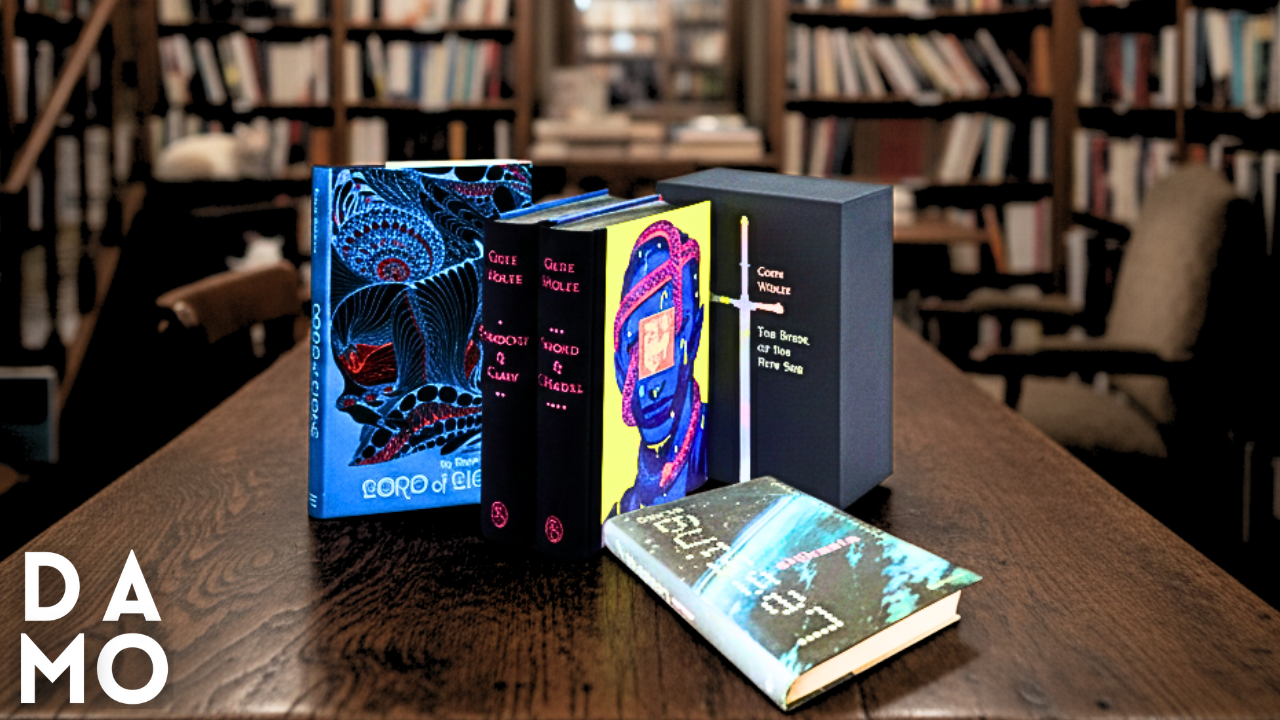
It’s darkest night and you’re lying under the sparkling dome of stars
And what you’re feeling is…awe? Wonder? Maybe even terror?
There are no words for this fleeting moment when we grasp the numinous, the transcendent
The sublime
So we try to capture the sublime in a story
As you gaze up into the black what story do you see?
Do you see the void of space, the atomic fire of infinite suns, the laws of gravity, energy and matter?
Or do you see the heavens above, a perfectly ordered cathedral, all to the glory of a divine creator?
This is the story of a fight for the transcendent. A struggle over the sublime. A battle between two mythic stories that both claim to show us the reality beyond the real.
One a story of science, the other of religion.
And it’s the story of 7 books…plus a few chucked in for good luck…that combine the stories of science and religion.
The 7 theological science fiction novels you
Must read?
Have to read before you die?
It just feels a bit absolutist, you don’t HAVE to read anything
How about the 7 theological science fiction novels you *might* like to read.
Watch the full video essay here
“The laws of the universe are never broken. Your mistake is to think that the little regularities we have observed on one planet for a few hundred years are the real unbreakable laws; whereas they are only the remote results which the true laws bring about more often than not; as a kind of accident.”
CS Lewis, That Hideous Strength
ONE – ANGLICAN ANTI-SCIENTISM
I’m a third generation science fiction reader. My grandfather read HG Wells and Jules Verne. My mother loved Arthur C Clarke and Kurt Vonnegut.
I was lucky to grow up in a home with a lot of books, and at the heart of my mum’s book collection were a pair of bookends that held our sacred books.
At one side of the bookends was the Holy Bible, which I have to be honest didn’t get read much.
At the other end was JRR Tolkien’s Lord of the Rings which had been read so often it was falling apart. And between the two was
CS Lewis Space trilogy – Out of the Silent Planet, Perelandra and That Hideous Strength.
Battered original paperbacks.
Which I didn’t like reading because I’d already been burned once by CS Lewis when I finally realised that Aslan was Jesus Smuggling.
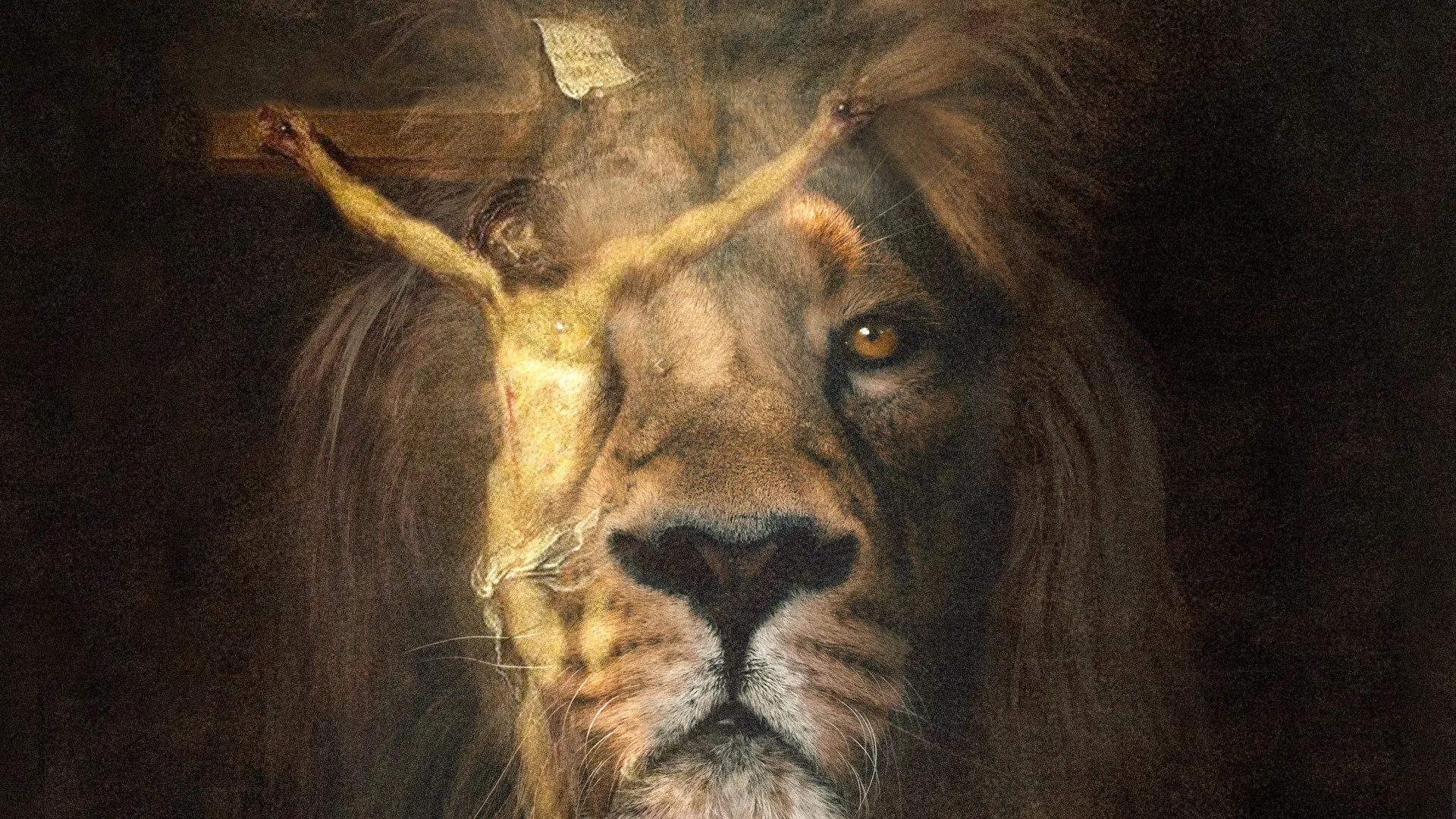
The Space trilogy is a story of space ships, journeys through space and adventures on other planets. The stuff of science fiction.
The trilogy stars scifi’s most famous philologist, professor Elwin Ransom. Philology is the study of the history of language, and also happened to be the profession of Lewis’ great friend, JRR Tolkien.
While on a walking holiday Ransom is kidnapped and taken to Mars, known to its inhabitants by its true name Malacandra. From where Ransom is swept into three short books worth of adventures.
But like the Christian allegory smuggled into Narnia, there is more than meets the eye to the science fiction of CS Lewis.
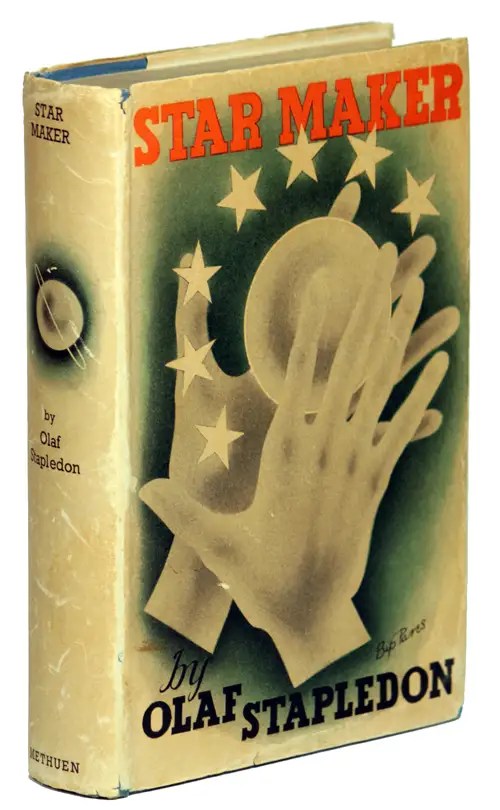
To understand what the Space trilogy is really about we need to understand Star Maker by Olaf Stapledon.
Inspired by the revelations of radio astronomy, British philosopher William Olaf Stapledon wrote Star Maker, a dream-journey across the galaxy being revealed at that time by science
CS Lewis *hated* Star Maker. In a letter to none other than Arthur C Clarke, Lewis described the book’s ending, where we are shown the titular Star Maker as an uncaring entity who created our universe at random, as one of many, as “sheer devil worship”.
Star Maker was the new mythos of science fiction.
So Lewis wrote the Space trilogy as an answer, not just to Stapledon, but to all science fiction.
Where Stapledon showed space as the darkness of void, Lewis showed space saturated with divine light. Where Stapledon’s universe teems with the random products of biological evolution, all life in Lewis’ universe is engaged in a great struggle between good and evil.
The Space triology is an attack on what Lewis called “scientocracy” or scientism, belief in science as the sole and only valid form of human knowledge, in favour of Lewis own Anglican christian theology.
So to really understand the Space trilogy, read it as as science fiction that is against science, a counter-revolutionary narrative in the war between science and religion…
…for the story of the sublime.
#
But we need to talk about theology.
“Theos” is the old Greek word for God
Kind of
“Logos” is the old Greek word for knowing, the root of our word “logic”
So theology means something like a logical understanding of God. But because God is so vast, theology is more like a logical understanding of everything.
So if you’re being told that you are an immortal soul, in a cosmos created by an All Father, who will judge you after death
or send his Son to do the job
and condemn you to either heaven or hell
You’re being given the theology of Christianity. Or a part of one of its varieties.
And let’s make no mistake, theologies are made by people. Monks, philosophers, storytellers
Scifi writers
Who take the weird ideas and strange myths of their time
And try and organise them into a logical – or at least internally consistent – theology to explain
Everything
There are many theologies, and many more that once thrived then were lost. During this walk we’re going to see how Christian theology, in a couple of forms, Buddhist, Hindu, Sufi mysticism and even Gnostic theology have manifested in science fiction.
To create a new Theology of Scifi.
What every religious theology offers is something beyond the material world — a soul, a heaven, a god or gods.
The theology of science fiction, by contrast, insists again and again that these heavens, gods, and souls can all be found within the material.
Where religion keeps hope transcendent,
science fiction does everything it can to immanentize the eschaton
“We believe that we invent symbols. The truth is that they invent us; we are their creatures, shaped by their hard, defining edges.” – Gene Wolfe, The Book of the New Sun
TWO – CATHOLIC COSMOLOGY
We the science fiction community keep Gene Wolfe in reserve for when newbies get cocky
So you’ve read your Heinlein, Le Guin and Octavia Butler? And you think you get science fiction now, do ya kid?
*hurls Book of the New Sun onto the floor*
Pick up the book
First you’ll think it’s not science fiction
Then you’ll realise it is science fiction
Then it’ll rewrite what the words science fiction mean when your brain hears them
You think I exaggerate? Everyone always thinks I exaggerate.
Start reading. And keep reading. Then read again.
Until you understand.
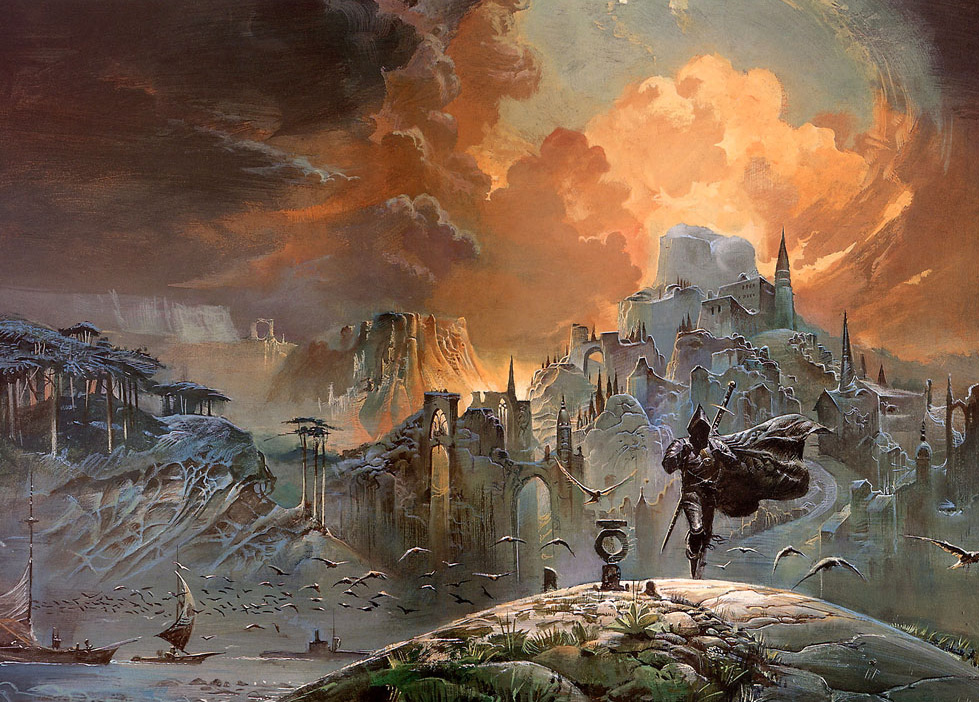
The first thing you’ll start to notice about The Book of the New Sun, within a few chapters of its first volume The Shadow of the Torturer, is that this seeming medieval fantasy world is in fact a very far future world, under a swollen red sun, a Dying Earth…
…a mythos set at the end of the solar cycle, emerging from the gothic fictions of Clark Ashton Smith and James Branch Cabal, through the sublime stories of Jack Vance, reaching its apogee in the genius of Gene Wolfe.
On my first attempt to read Gene Wolfe’s masterpiece I bailed at an early discription of torture. I feared the book was going to be the kind of sadistic torture-porn that infests the cheapest kinds of scifi and fantasy.
John Norman’s Gor with literary pretensions.
Please rest assured it is not.
On my second attempt I bailed from BotNS because I was annoyed by the suspicion that the book’s true meaning was going waaaaaay over my head.
But on my third attempt something clicked, and I realised that Gene Wolfe is the greatest writer ever to write science fiction.
No exaggeration. Wolfe is the JS Bach of science fiction. The layered symbolism, the sheer complexity and deep meaning of BotNS, the baroque beauty of its prose, is far beyond all other scifi and fantasy.
Keep reading until you get it.
If you persist you will learn that the Book of the New Sun is the most complete work of theological science fiction ever written.
Gene Wolfe was a Catholic convert and a believer in Catholic cosmology. Wolfe sets himself the gargantuan task of showing how the entire cosmology of Catholicism…
…from the Alpha to the Omega…
…the Dying Earth to the New Sun…
…can be proven to be an absolutely accurate and higher level description of the same lower base reality described by science.
And science fiction.
But to understand what that means you’ll have to read The Book of the New Sun.
Many times.

“We are all creatures of the stars and their forces, they make us, we make them.” – Doris Lessing, Shikasta
THREE – SUFI MYSTICISM MEETS RADICAL SOCIALISM
It’s a widespread and mistaken belief that no science fiction writer has ever won the Nobel prize for literature. But in fact two very great writers of science fiction have won, both for works which fuse the myths of science and religion, and both play a part in this story.
Shikasta is a fallen world. Long ago it was Rohanda, a Colony of Canopus, a galactic civilization that had aided the evolution of the planet’s ape species into humanity. But a cosmic misalignment throws the planet under the exploitation of the evil empire of Shammat.
Rohanda becomes Shikasta, and much later becomes our Earth.
Canopus sends emissaries to its former colony. Canopus is capable of faster than light travel through physical space, but this path is slow. Instead the emissaries of Canopus journey through spheres of spiritual reality before “incarnating” on Earth in human forms.

Doris Lessing was a famed feminist author when she published Shikasta in 1979. But, ironically, this lead to her science fiction novels being somewhat overlooked by both literary and scifi readers.
Lessing was also a committed follower of the Sufi mystic Idries Shah. Sufism is a mystical tradition which teaches that humankind has the potential to expand our consciousness, not in the next world, but in this world.
Lessing was also a radical socialist who believed in the possibility of making a better world through political action.
And so the mystical and the political meet in Shikasta.
Canopus emissaries on Earth incarnate first as religious prophets, then later as political radicals and revolutionaries, alienated from this fallen world and slowly discovering their divine mission to raise up human consciousness.
And make the fallen world Shikasta, Rohanda again.
Ironically, Lessing’s science fiction has been criticised by radical thinkers as colonialist, with “Rohanda” being the colony of Rhodesia where Lessing was born, and Canopus as an idealised fantasy of its British colonisers.
Nonetheless, Lessing creates a potent new theology in Shikasta. The ideology of socialism, fused with mystical intensity, expressed in the symbolism of sci-fi.
Shiksata is theological science fiction that 100% immanitizes the eschaton.
#
And speaking of manifesting paradise on earth, I’d like to thank the sponsor of today’s video.
CultOS
Are you a visionary religious leader, a wellness guru, or a prophet of a new age? Are you tired of using messy spreadsheets to track follower enlightenment and group chat apps to schedule your synchronized chanting?
You need CultOS. It’s the all-in-one, Software-as-a-Service platform designed to help you run your high-demand spiritual organization.
With the sleek CultOS dashboard, you can:
- Manage your Devotee Acquisition Funnel to seamlessly convert curious outsiders into dedicated acolytes.
- Use the Acolyte Relationship Management module to track key metrics like tithing history, doubt levels, and transcendental progress.
- Automate your outreach with Doctrine Drip Campaigns, sending your sacred texts and daily affirmations directly to your flock.
- And easily schedule everything from morning meditations to communal chore wheels.
Stop worrying about logistics and focus on what you do best: dispensing absolute truth.
CultOS scales with your ambition. Start with the ‘Community’ plan for your burgeoning yoga studio, and upgrade to the ‘Compound’ package when you’re ready to go off-grid.
And for our most successful clients, we’re proud to announce our new enterprise-level add-on… the Eschaton Module. For a nominal fee, you can now seamlessly pivot your thriving spiritual movement into a world-ending apocalyptic event.
“Matter is plastic in the face of Mind.” – Philip K Dick, VALIS
FOUR – THE IRON CAGE OF GNOSTICISM
Brothers, sisters, scifi nerds – our faith has had no truer prophet than Philip K Dick.
PKD became a household name when his novel Do Androids Dream of Electric Sheep? was reborn on screen as Blade Runner. He died just months before the premiere in 1982 — never seeing the myth he wrote become immortal.
Through the 1960s he showed us the true weirdness of reality in his novels: Ubik, The Man in the High Castle, The Three Stigmata of Palmer Eldritch, visions that defined him as the strangest and most prophetic voice in American SF.
Then came 1974. The pink beam. A laser from nowhere. Days of visions. A revelation from above.
In the decade that followed, Dick wrote like a man decoding God’s private signals. VALIS. The Divine Invasion. The Transmigration of Timothy Archer. Together — The VALIS Trilogy.
Of Gnosticism.
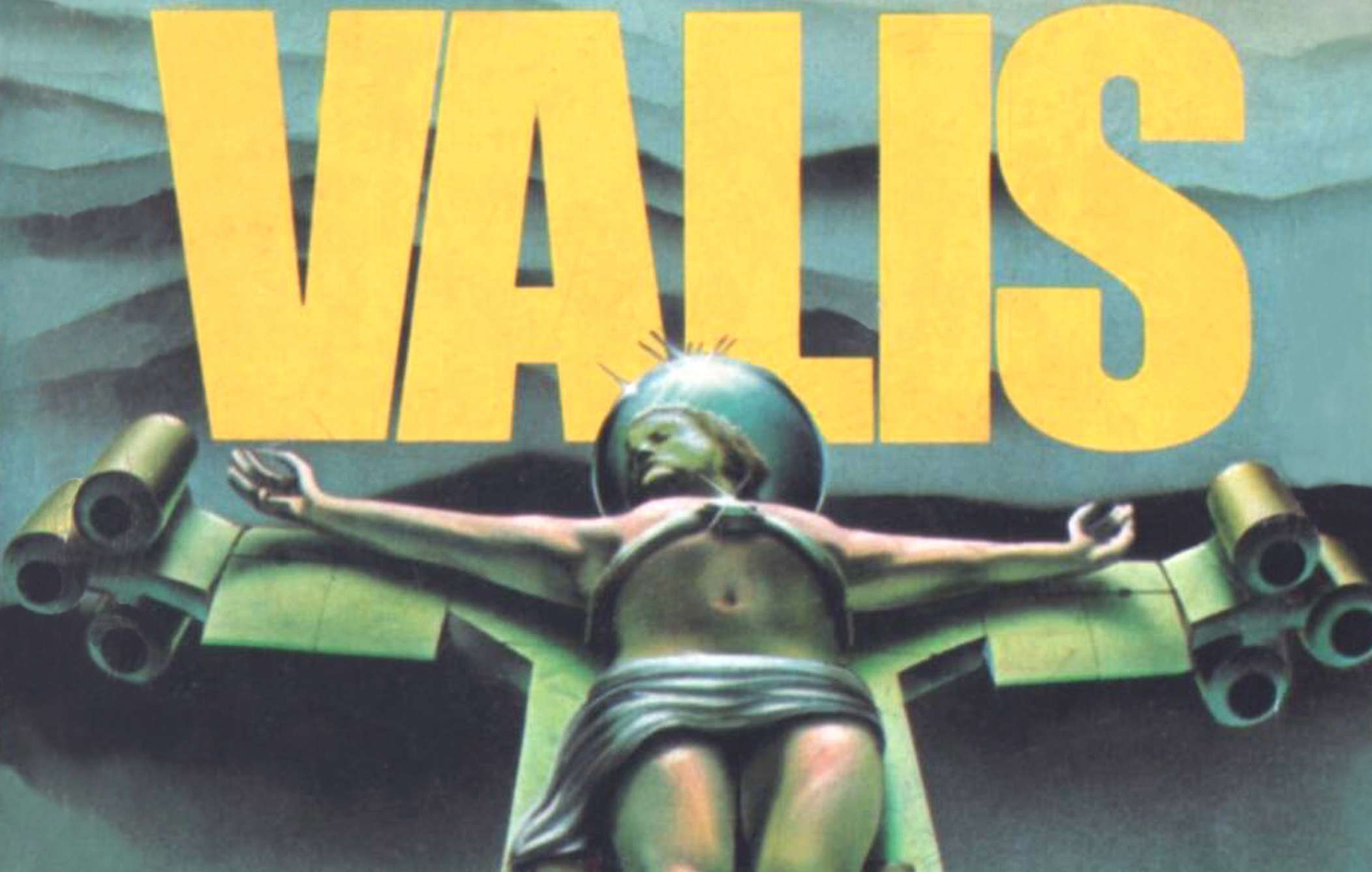
Raised in the church, Dick died a heretic, a Gnostic. To him the God of churches was not God at all, but the demiurge — a false creator, trapping humanity in illusion.
For Dick, “the Empire never ended.” Rome had not fallen. It had metastasized — into the Catholic Church, into Western power, into the Republic and Senate we still mimic today.
And just behind the stage-set of the world, a truer reality looms. A planet run by corporations. A globe ruled by an ancient empire. All reality an iron cage made by a mad God.
But there, coming down from orbit, an invading power:
A Ubik body spray.
An empathy machine.
A Vast Active Living System waiting to crack the cage.
Philip K. Dick was not just a writer.
He was the first prophet of science fiction.
“The turtle moves.”
Terry Pratchett, Small Gods
FIVE – DESERT CULTS AND THE RISE OF REASON
Let’s take a brief interlude from such weighty matters with the mighty Terry Pratchett
And his tale of Small Gods
Which is for my money Pratchett’s best book in the massive Discworld series
And is the anti-thesis to theocratic scifi
The mighty god Om decides to manifest on the mortal plane as a Bull to ravish some virgins.
Only to discover that, even in the heart of the religious empire of Omnia, built in his name, not a single human actually believes in the god Om.
Denuded of power the god can manifest only as a lowly tortoise.
A book which preaches, in Pratchett’s warm voice, that the stories we tell about gods have little or nothing to do with any actual god.
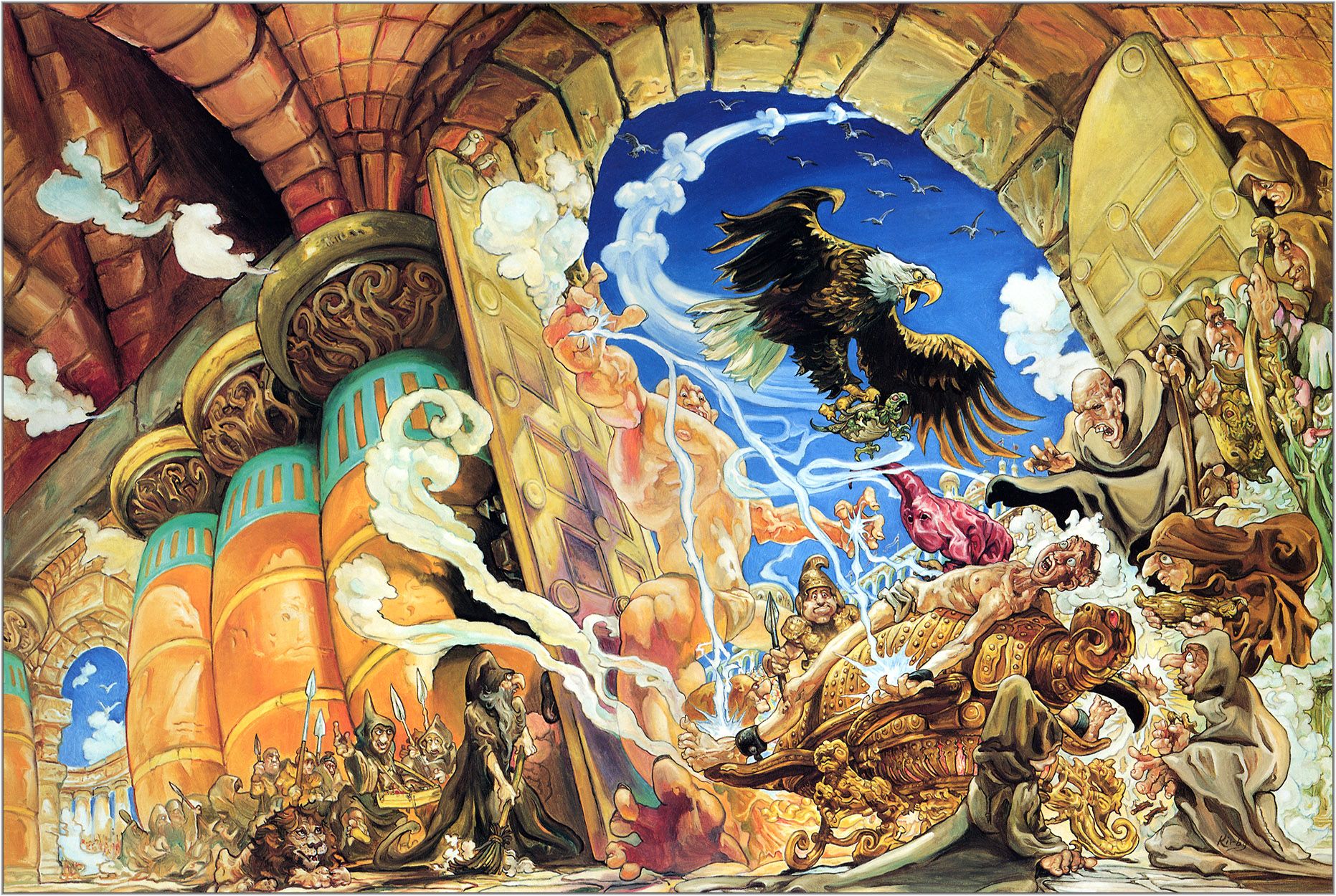
Small Gods shows us the full military might of Omnia, which has crushed all learning to preserve its religion, come into conflict with a smaller nation that values science. And Omnia gets its butt kicked.
Reason beats religion every time.
Small Gods also features an argument over theology that mirrors the theme of this discussion. The Church of Om believes the world is a sphere, a story it enforces by persecuting believers in a flat world, who share the secret that “the turtle moves”.
This is Discworld after all.
It’s not quite right to call Pratchett’s perspective atheism. Skepticism, certainly. But it’s not that Pratchett doesn’t believe in anything beyond the material.
Again and again in Discworld we come to the edges of life and find Death there waiting. Literally.
It’s just that our stories, myths, beliefs, faiths, churches and religions have absolutely nothing to do with whatever lies beyond.
They’re about us. Right here and right now. And our games of power.
Worth keeping in mind as we get back to thinking about science fiction theologies.
THEORY INTERLUDE
Let’s take a moment to talk theory.
While researching this essay I was suggested Science Fiction Theology by Alan Gregory. I have NOT been able to read this yet, but from reading the abstract, it explores a similar thesis to the one presented here, but from the Christian perspective.
Why does science fiction, as an explicitly secular mythos, so often borrow and transform the symbolism of Christianity?
There’s a good reason scifi writers call the Singularity the “Rapture of the Nerds”. Christ like Saviours are everywhere in scifi. From Neo to Joseph Cooper to John Connor. The post-apocalypse is, quite literally, judgement day.
The Marxist literary critic Frederick Jameson in his book The Political Unconscious suggests an answer to this mystery about science fiction.
“Someone once said that it is easier to imagine the end of the world than to imagine the end of capitalism. We can now revise that and witness the attempt to imagine capitalism by way of imagining the end of the world.” Fredric Jameson
Jameson’s answer is that we’re still imagining Judgment Day because we’re still in a civilization of contradiction and injustice that must soon blow itself up.
The tensions and traumas of living together in a human civilization always find expression in our mythos. The symbols of Christ and Heaven Above, with a few scifi tweaks, still express the same tensions.
Here in 2025 we have a tremendous tension between a super-wealthy elite and…everyone else.
Our next book tackles that idea, through the theology of Buddhism.
“No word matters. But man forgets reality and remembers words.”
Roger Zelazny, Lord of Light
SIX – THE ULTIMATE REBEL
Roger Zelazny is arguably the most underestimated science fiction writer today.
Zelazny burst onto the scifi scene in 1965 aged just 28 (the average age of new science fiction writers is 128) with the Hugo award winning This Immortal.
More groundbreaking, mindbending science fiction followed with The Dreammaster and Creatures of Light and Darkness.
Zelazny then dedicated much of the next 20 years to his sprawling multiverse Chronicles of Amber. A commercial hit in its days, but a somewhat watered down Zelazny that hasn’t aged too well stylistically.
The lack of a big screen adaptation has left Zelazny as an obscure genius of science fiction. But if any Hollywood auteurs wanted to tap into peak Zelazny, his 1967 novel, winner of Hugo and Nebula awards, is the book to pick.
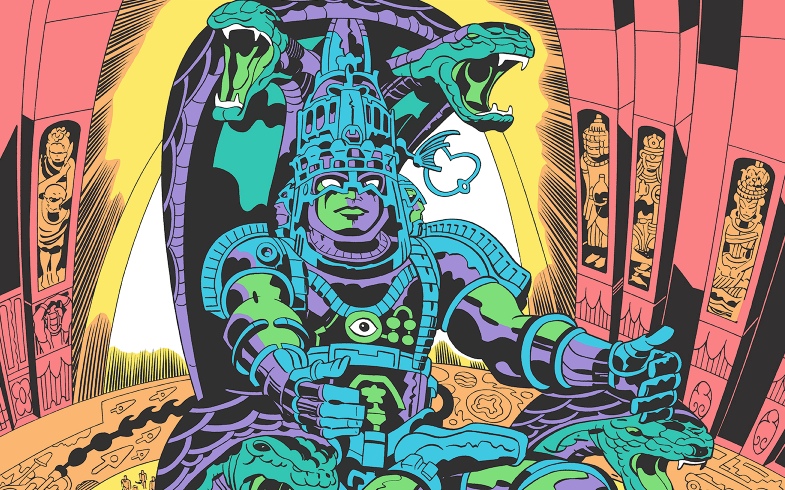
Lord of Light is set on an alien world long before colonised by humanity. But the early colonists used their technology to establish themselves as gods over the world. They entrapped the world in feudal serfdom, and established themselves as gods.
The Hindu gods.
But one early colonist named Sam, short for Mahasamatman, rebels, and reincarnates again and again into the world as the Buddha, to liberate humanity from their oppressive gods.
To understand Lord of Light it helps to know that Buddhism is a rebel theology against Hinduism. For instance, in Hinduism the concept of “reincarnation” tells people that their place in the social hierarchy is based on actions in previous lives, justifying oppression and the worst injustices.
Buddhism reverse reincarnation. A high social status means you are more deeply trapped in the cycle of Samsara.
Lord of Light is a science fiction novel about the power of religious theology. The god-like colonists use a corrupt religious theology to keep their world enslaved in a feudal medieval system. Sam delivers a new theology, a theology of liberation, to free humanity from the gods.
A theology of science fiction.
“Oh, if only it were possible to find understanding,” Joseph exclaimed. “If only there were a dogma to believe in. Everything is contradictory, everything tangential; there are no certainties anywhere. Everything can be interpreted one way and then again interpreted in the opposite sense. The whole of world history can be explained as development and progress and can also be seen as nothing but decadence and meaninglessness. Isn’t there any truth? Is there no real and valid doctrine?”
Herman Hesse, The Glass Bead Game

SEVEN – BEYOND THEOLOGY
When I was eighteen, my mum who gave me my love of scifi, died of cancer. The few years that followed were dark ones for me, as I worked my way through college waiting tables.
When I wasn’t working or studying I found refuge in science fiction. Many of the books on this list like Shikasta and Lord of Light were read at that time, and had a huge influence on me.
I have to say I was underwhelmed by university itself but it gave me access to two invaluable things.
A vast library of books and the internet.
And in that college library I found a science fiction book written in 1943 that said everything about the internet of 1999.
The Nobel prize for Literature is awarded for a lifetime body of work. But when Herman Hesse won in 1946, the Glass Bead Game was given a special citation.
Making Hesse the second of our two science fiction Nobel winners.
The Glass Bead Game is the culmination of many themes of Herman Hesse’s writing.
In famous novels like Demian, Steppenwolf, Siddharta, Narcissus and Goldmund and Journey to the East, Hesse contrasts the Life of the Mind, or Vita Contemplativa.
With the Life of the World, the Vita Activa.
As a young student in the process of dedicating myself to the Life of the Mind, I read Hesse as the torment of being torn between these two paths.
Should we, like the handsome soldier artist Goldmund, fuck and fight our way through the world? Or should we retreat to the monastery and the games of the intellect?
The Glass Bead Game is Hesse’s final attempt at an answer. In a near future after a destructive global war, an order of intellectuals live a cloistered life engaging in the ultimate game of the mind.
The Glass Bead Game.
The game itself is never shown. We are only told that players use glass beads to represent any and all forms of knowledge. A Bach composition can be synthesised with Einstein’s relativity and placed in contest with a literary theme from Shakespeare.
Written at the very start of the digital age, Hesse’s Game is a powerful metaphor for our condition. Endlessly and obsessively combining and recombining the knowledge we now hold as patterns of ones and zeros.
But the purpose of the game, in Hesse’s novel, is to illustrate the ultimate futility of intellectual games. The greatest player of the glass bead game finally quits the life of the mind, for the lived experience of life itself.
In our story of theological science fiction then, Herman Hesse gives us a final full stop. The mythos of religions and the new mythos of science fiction fiction are both intellectual constructs, mental imaginings, dream worlds, phantasms.
And it is time to return to the real.
#
This has been a long walk through seven of the most complex and intellectually challenging science fiction books ever written.
Reading and understanding all seven could be a lifetime’s work.
We began with CS Lewis and Gene Wolfe, great writers who reasserted religious theologies. We saw Doris Lessing meld the ancient mystical with the midern political, and Philip K Dick’s prophetic vision of liberation. Terry Pratchett and Roger Zelazny brought us back to science and reason.
The war between the religious theologies of the past and the new theology of scifi has been raging for some hundreds of years.
And is only becoming more intense.
We ended this walk with Herman Hesse who I think makes the final argument that the sublime truth of reality can never be captured in any story.
But the stories we tell about the sublime still matter.
Religious theologies insist that a better world can only exist beyond the material. Heaven. A higher state of reincarnation. This world is doomed, and mired in sin.
And if you really look at the conservative critique of the world, it boils down to their core belief that the material world cannot be made better.
But in response science fiction has imagined ever more innovative ways to Immanitize The Eschaton.
Because this is the real power of the new theology of scifi.
It doesn’t accept a fallen world with redemption in the next.
It imagines a better world.
That we can make real in this world.

But but but…whatabout…
A Canticle for Leibowitz is about religion but not in itself theological. Frank Herbert’s Dune is about…everything. The Sparrow and A Case of Conscience, Lem’s Solaris and Heinlein’s Stranger in a Strange Land could all be read theologically.
Make your nominations for more theological science fiction in the comments.
And for more philosophical scifi, learn about the dangerous philosophy of Ursula K Le Guin here.
 Damien Walter