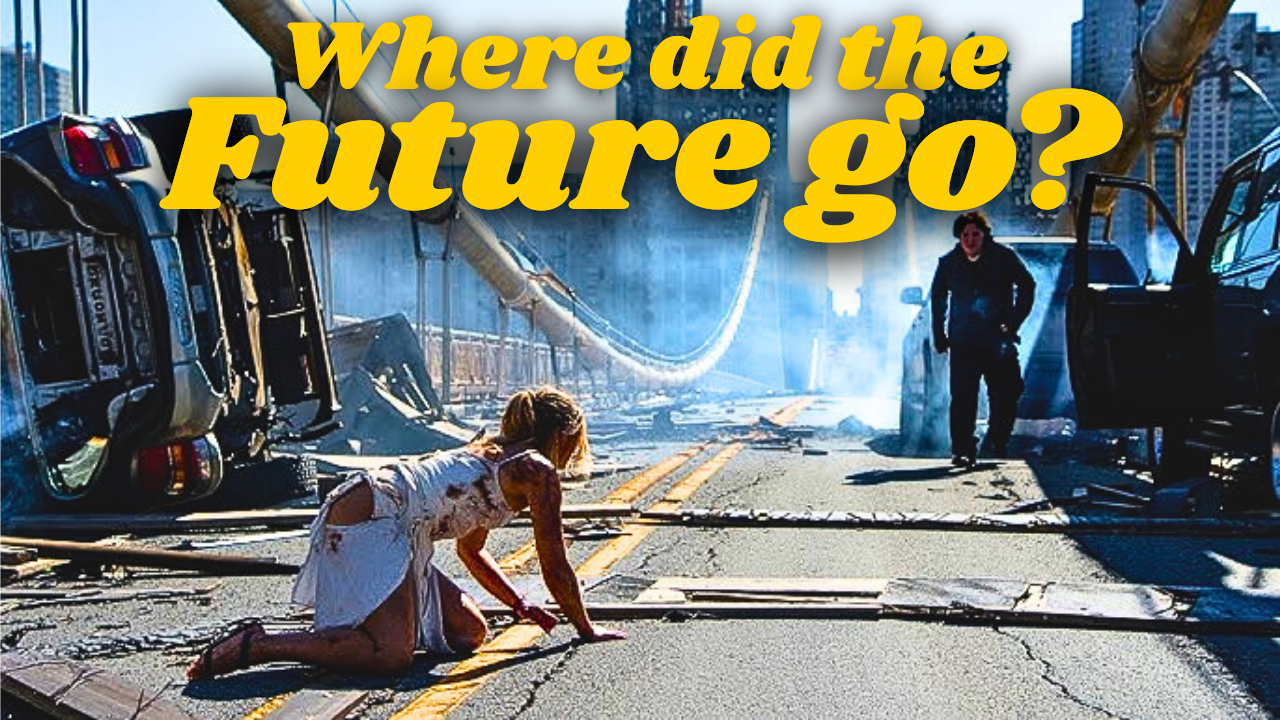
“It’s easier to imagine the end of the world than the end of capitalism.”
Mark Fisher / Slavoj Zizek / Fredric Jameson
Where did the future go?
It’s not just that our future looks bleak.
You can’t boot-up Netflix without the latest political dystopias, civilizational collapse thriller or a “gritty” new take on the post-apocalypse punching you in the gut.
Going on social media in the 2020s is like being repeatedly slapped in the face with a wet copy of Cormac McCarthy’s The Road.
We’re a generation trying to figure out if our skills in web-design are transferable to surviving the Thunderdome.
And the news is legitimately packed with existential disasters. Ecological collapse. Nuclear risk. Resource wars. The construction of yet another data center that uses more energy than the state of Oklahoma so we can pay a supercomputer to draw subpar manga.
We keep building a new machine to solve the problem caused by the last machine we built to solve a problem itself caused by one of our machines. All the way back to flint axe and the carrier bag.
Machines. We can’t live with them, and we certainly can’t live without them.
And it seems we can’t imagine anything beyond them.
Watch the full video essay on YouTube
Science fiction tells two stories of the future.
In one, humanity steals fire from the gods and grasps control of our machines. In these Promethean futures men, competent men with engineering degrees, build the future with machines.
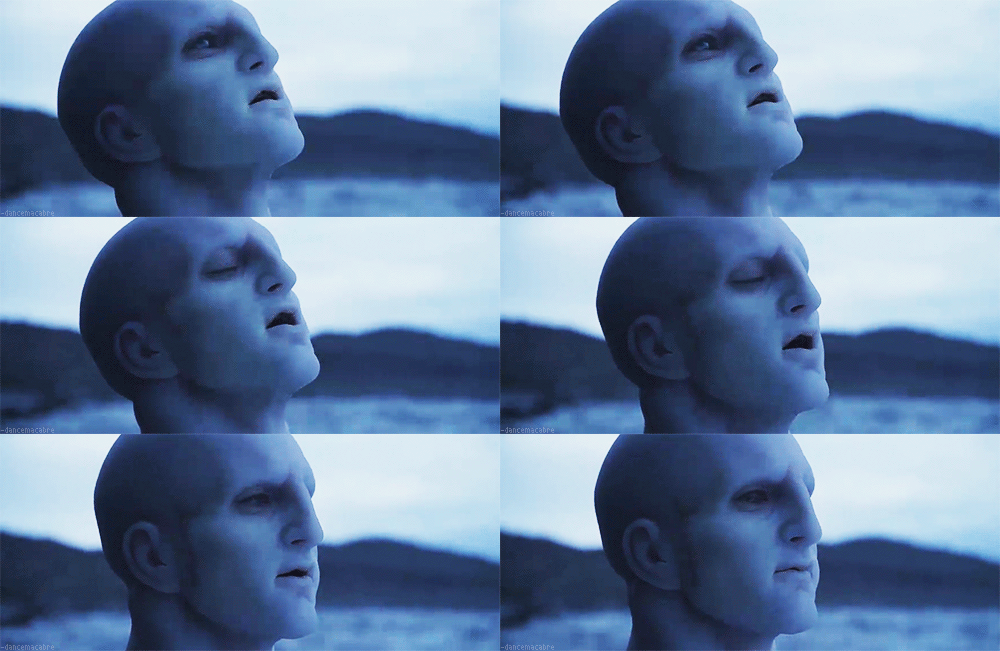
The crew of the Enterprise and its warp engines explore strange new worlds. The Psychohistorians of Asimov’s Foundation build a higher civilization. Men leave Earth to build megastructure ringworlds and dyson spheres again and again from Starmaker to the Bobiverse.
You can find some sparks of Promethean scifi in For All Kind, a future fantasy about what if we just kept building bigger and better machines.
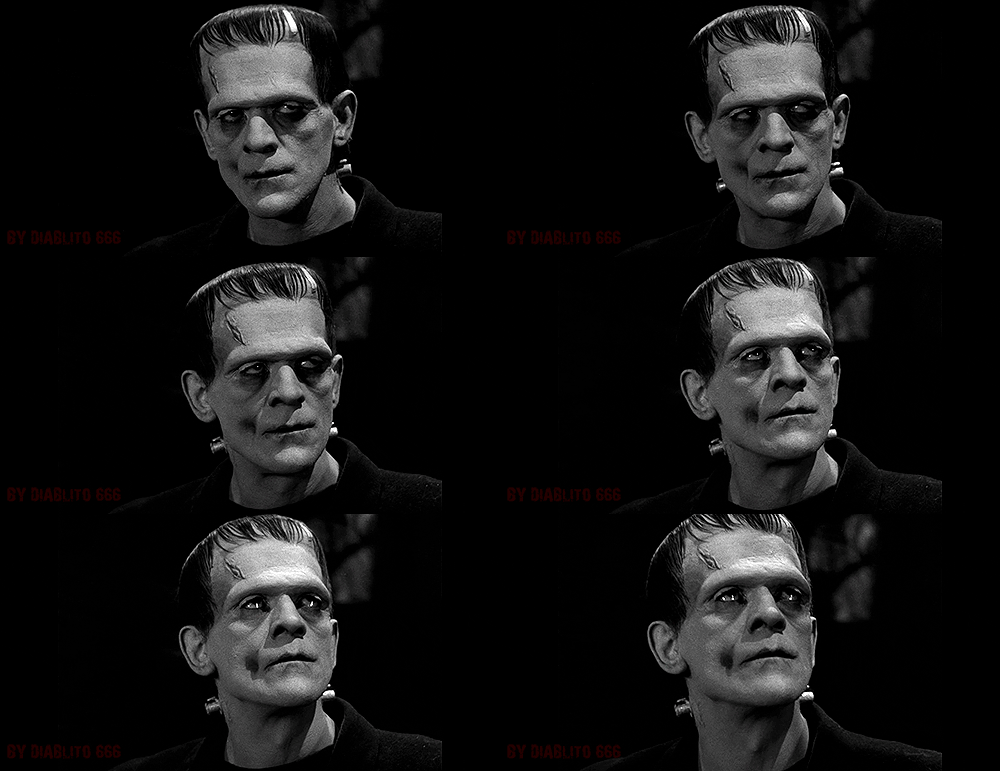
In the first true work of science fiction the brilliant young philosopher Mary Wollstonecraft Shelley began the dialectic that scifi is still struggling with 200 years later.
On hand we have the Promethean scientist Victor Frankenstein and his efforts to create life as man creates machines.
On the other we have the creation. The monstrous product of making man in the image of the machine.
“Frankenstein scifi” shows us, again and again, the machine taking over, making man its slave or destroying humanity all together.
Fritz Lang’s Metropolis. The Machine Stops by EM Forster. The Death Star. William Gibson’s Neuromancer and all the cyberpunks. Skynet and the Terminator. The Borg. The Matrix.
The Machine will raise us up!
The Machine will enslave us!
The Machine will destroy us!
The Machine will save us!
Science fiction has been cycling between Prometheus and Frankenstein for 200 years.
The only way to escape this dialectic is to steer into the heart of the contradiction.
To understand the sublime object of science fiction itself.
The Machine.
But before we descend further into the abyss: a bit of housekeeping from the studio. We have a new 150” projector screen, perfect for watching the Jackpot livestreamed in 4k
AND projecting backgrounds for many new video essays…we’ll get to those in a mo.
Three things happening behind the scenes:
- The Great Content Consolidation: Over the next couple of months, we are syncing all member platforms. Whether you’re on the website, Patreon, Substack, or YouTube, you’re getting the full library of Science Fiction video essays. No more digital scavenger hunts.
- Omnipresence: Video essays on YouTube AND Spotify. Written versions on Medium. And I’m putting select videos on Rumble… mostly just to troll the “Joker Right” and see if they can handle words with more than two syllables.
- Special Projects: No more audio commentaries. I’m putting all that energy into the main essays. The podcast feed will have audio versions of the videos a few days after the main channel.
However, keep an eye out for a second channel…for the weird stuff. It’ll happen when the Machine allows it.
Thanks!
#
I started the Science Fiction community, and the podcast, and this channel, to find a better future. Or at least a story of the future that didn’t involve me fighting a mutant over a can of dog food.
It was the peak of Covid. I was “hiding out” in Bali. With a couple of stray cats and far too much time to watch the digital world catch fire on Twitter.
And I got into an argument with Neil Gaiman.
Twitter is now Xitter and Neil has since… well, let’s say he disgraced the mythos and retreated to the shadows.
We’ll dissect that carcass another time.
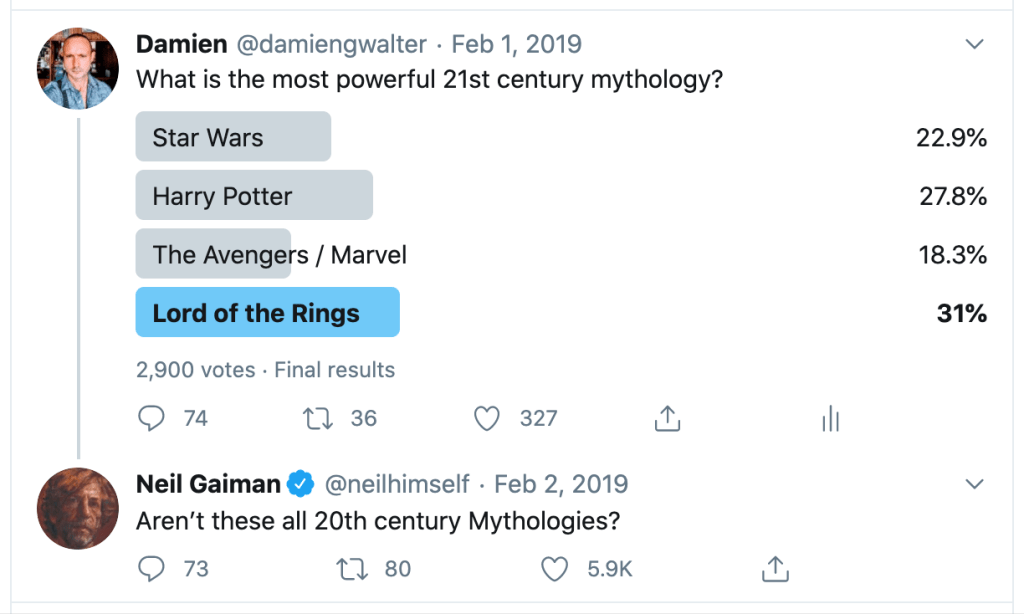
I wanted to know what the greatest “mythos” of the 21st century was. Neil answered that those all seemed like 20th-century myths.
And when the 21st century myth showed its face, we would know.
Give Neil his due, the man knows his myth.
So I woke up at 3am with an idea burning my third eye open.
Science Fiction is the mythos of Modernity. It’s the secular scripture that replaced the gods. But could it be the mythos of what comes next? Or is scifi just the final suicide note of a dying species?
So began my quest to find an Actual Viable Story for our future.
A 21st century mythos.
A future we can all live with. And in.
#
Since then, we’ve dissected the greats.
The dangerous philosophy of Ursula K. Le Guin. The secret history of Stanislaw Lem. We even looked at Isaac Asimov’s real Foundation… not the shiny, hollowed-out Apple TV show that wears its skin like a Buffalo Bill suit.
We’ve analysed why corporate entertainment is so consistently soul-crushing. How the Corporate Entertainment Complex has turned the shared mythos of sci-fi into the cultural equivalent of a BigMac.
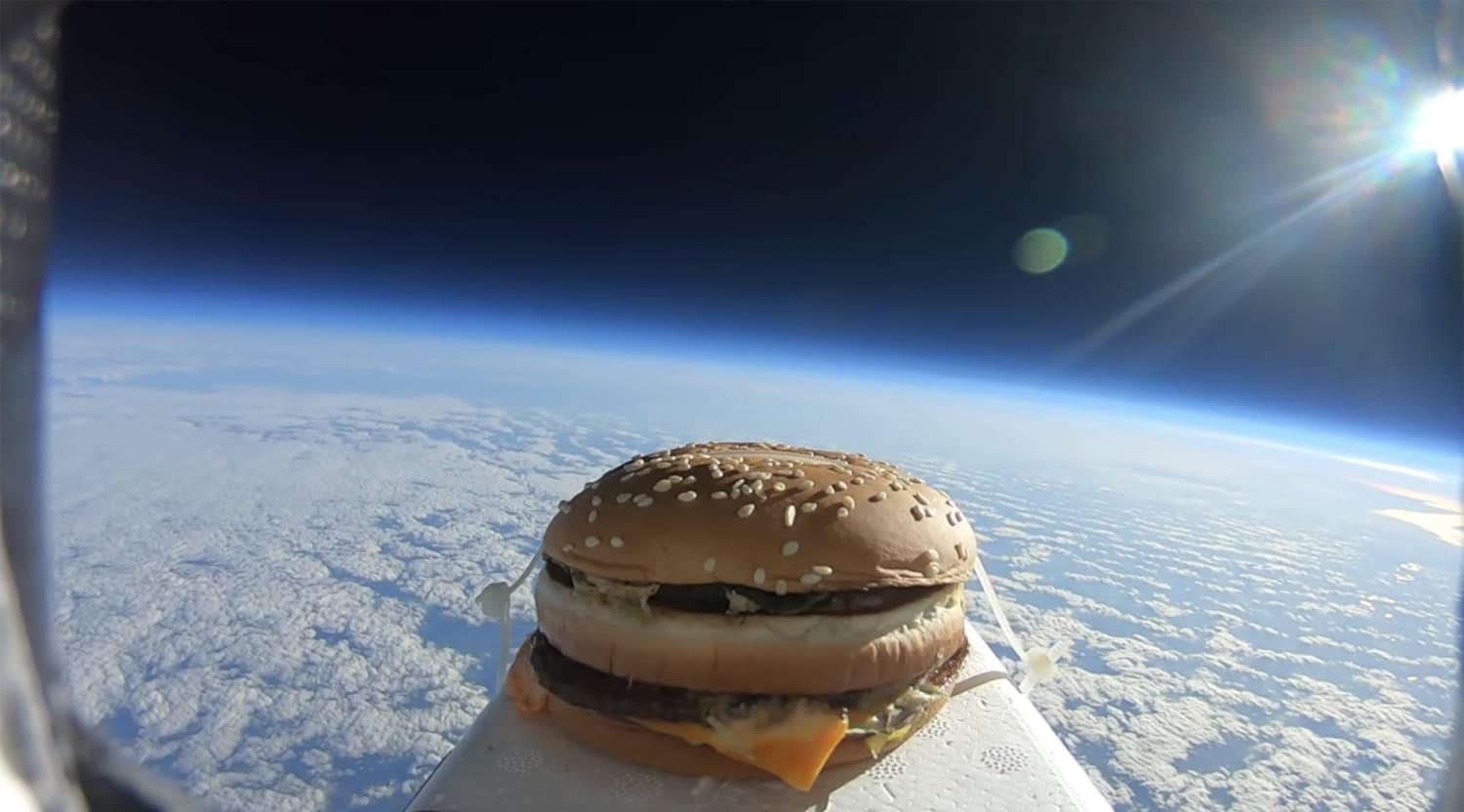
But we’ve also seen how great scifi can, now and again, be smuggled past the corporate bureaucrats.Like Pluribus and Severance. Honestly, good job on that one, Apple. You managed to make a show about the horror of working for Apple.
We’ve dived into the political impact of scifi myths. From H.G. Wells’ plan for a globalist superstate (the original “You will own nothing and be happy”) to George Orwell’s fear that the future is just a boot stamping on a human face, forever.
And yes, we have done, maybe, a bit too much Karl Marx.
But it wasn’t me who made the most important sci-fi show of the 21st century—Andor—a literal textbook on Marxist revolution. Blame Tony Gilroy! I’m just the guy pointing at the explosion.
There is a reason to resurrect a 200-year-old critique of capitalism. Because that’s where our future went. It didn’t vanish. It was sold.
To the machine.
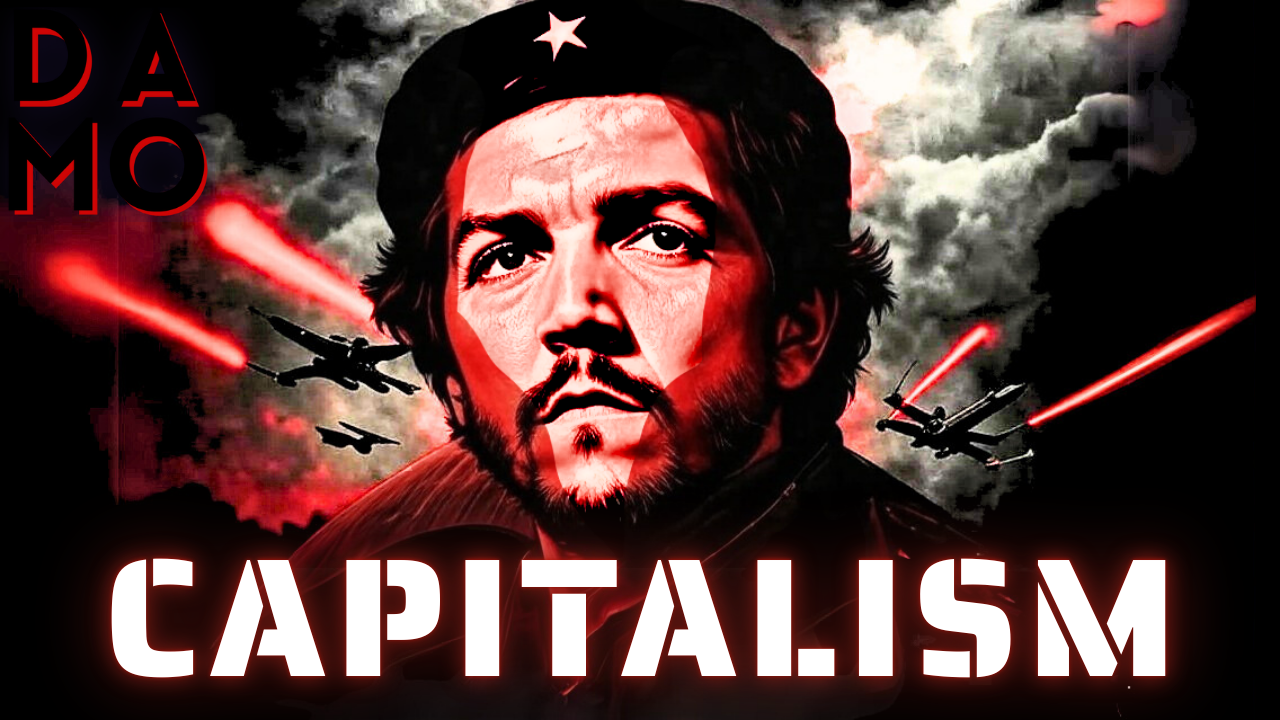
The Science Fiction channel is taking a journey into the heart of The Machine.
We’re going to analyse how the Machine was created in the imagination of humankind as the Sublime Object of science fiction.
We’re going to see how the mythos of scifi has been abused by grifters and gurus to mystify their victims with Technobullsh*t.
We’re going to grapple with the darkest philosophy born of scifi, the theoretical framework which demonstrates that capitalism
and the machine
are the same damn thing, and journey into the future that Accelerationists want.
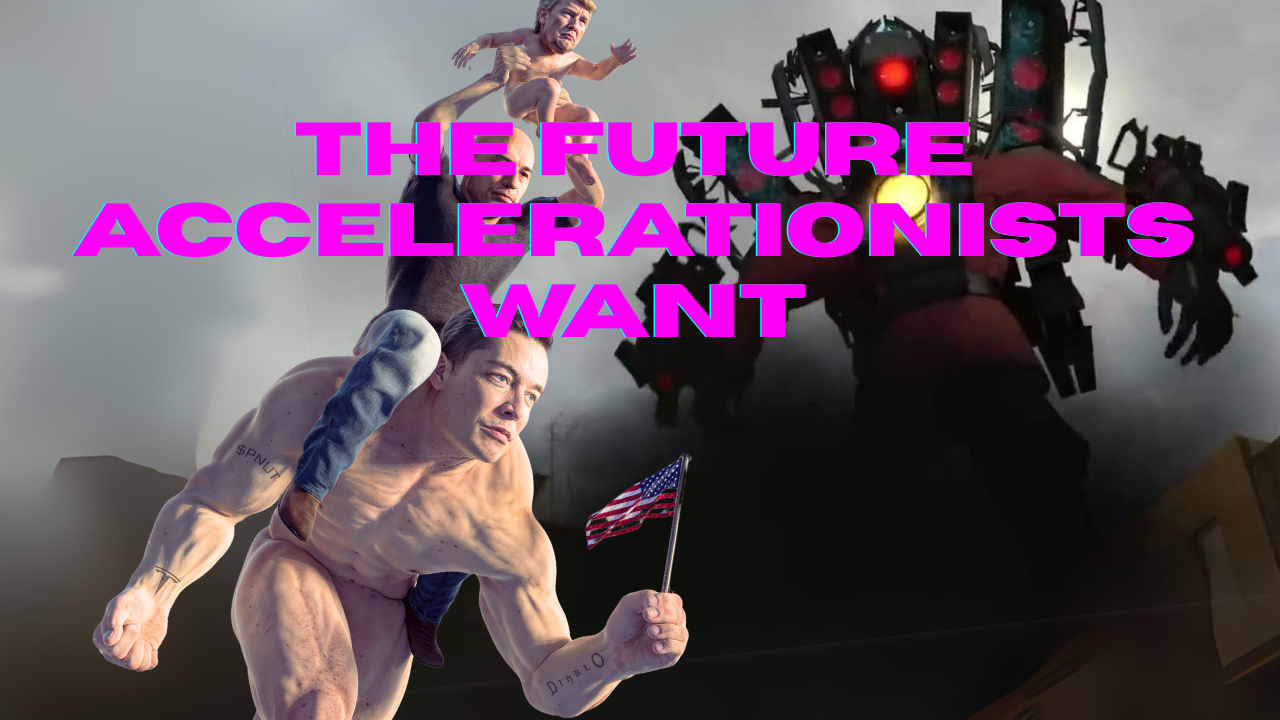
We’re wven going back to The Matrix to see how the “Red Pill” was perverted by the alt-right.
And we’re diving into the men who made transhumanism, the sexiness of cyberpunk, the invisible power of psychopolitics and much more.
To see how the machine was built, how it is managed, and where it is taking us all.
I remember Philip K. Dick abandoning his sequel to The Man in the High Castle because he was literally, physically ill from thinking about Nazis. To prevent the same, we’ll have some lighthearted side quests—like a dip into the mind of Douglas Adams.
We are walking into dark places. But we can’t get back to the future unless we understand the Machine that’s currently sitting in its seat.
I promise that, like Tolkien’s hobbits, we will eventually stumble back to the Shire. But first, we have to walk into Mordor.
And maybe explore the secret Stalinist meaning of Lord of the Rings.
“Resistance and change often begin in art. Very often in our art, the art of words.”
— Ursula K. Le Guin
There are many “logical” reasons we lost the future. Neoliberalism, resource depletion, the algorithmic grind.
But I want you to reverse the causality.
It’s not that the future was deleted by the dystopias. It’s that dystopia rushed in to fill the vacuum because we stopped telling better stories. We left the door open, and the monsters moved in.
It IS easier to imagine the end of the world than the end of capitalism.
So we must imagine harder.
Our art, the art of science fiction, is the only tool sharp enough to cut through the Machine.
We can do this.
Or, at the very least, we can die a nerd’s death trying.
Listen to the podcast audio here
 Damien Walter