“My name is Ozymandias, King of Kings; Look on my works, ye mighty, and despair!”
Ozymandias by Percy Bysshe Shelley. You know it, don’t you?
You’ve seen it on a Breaking Bad poster, or perhaps you vaguely recall it from a GCSE English syllabus you ignored because you were too busy wondering if a lightsaber could, in theory, be powered by a sufficiently large alkaline battery.
It’s a poem about a massive, male ego, crumbling in a desert.
It’s a poem about the fantasies of men.
Watch the full video essay on the Science Fiction channel
Men who are, as I speak, vibrating with a very specific, localised form of excitement. “Finally,” we the men cry, “Finally, we are getting Hard Science Fiction in the cinema!”
Hard SF. Defined as a narrative subgenre preoccupied with technical accuracy and the rigid application of the laws of physics. It is the “Hard” of the structural engineer. The “Hard” of the materials scientist. The “Hard” of a man who looks at a sunset and sees not a poem, but a predictable sequence of atmospheric scattering.
The “Hard” of man who has scathing things to say about “Soft” sciences.
The “Hard” of a man who hasn’t considered what repeating the word “Hard” over and over again might be saying on a Freudian level.
Enter Project: Hail Mary, the latest chunk of cinematic Hard science fiction from Andy Weir, the man behind the last chunk of cinematic Hard SF we all liked, based on his first novel – The Martian. You know, the one with the disappointing ending where Matt Damon survived.
Now Weir is back on the big screen with a blockbuster adaptation of his third and some say best novel. Can Project: Hail Mary repeat the formula of Hard SF box office success? Excitement is high among some scifi fans…
…but not all. Weir is, to be blunt, the Nickelback of science fiction. Everyone likes Rockstar, but people who actually know anything about rock music rightly hate themselves for liking it.
Because every interesting sub-cultural artform, such as Hard SF, eventually gets a mainstream, corporate facsimile
a hyperreal simulacrum
that is better produced and easier to swallow…
…but is just wrong.
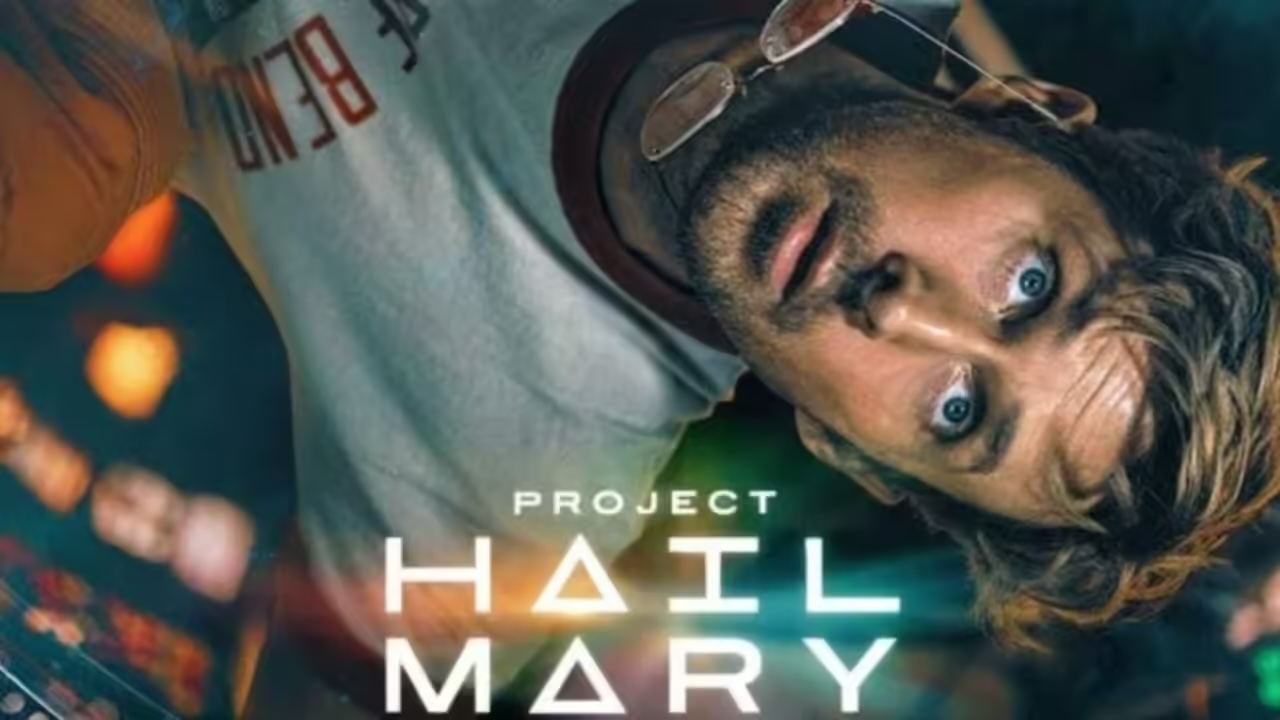
To be fair, Project: Hail Mary is an
ok movie.
If you ask ChatGPT for examples of “mid” it now shows you Project: Hail Mary
And plays Nickelback.
It’s a movie that can’t stop itself making callbacks to 2001 and Interstellar but is far, far too weighed down with relentless ironic banter and buddy-cop dynamics to come anywhere near the league of either.
It’s clearly a passion project for Ryan Gosling, an actor who everyone agrees is also a good bloke and a living icon of non-threatening masculinity who makes your wife, daughter, female and probably many of your male work colleagues literally gasp whenever he appears on screen.
As Ryland Grace. A man who wakes up in a spaceship with amnesia and immediately begins calculating the local gravity by dropping a series of inanimate injects. A man of the academy. A man who has, if we were to realistically represent his character, never made a woman gasp just by entering a room.
A contradiction we’ll come back to.

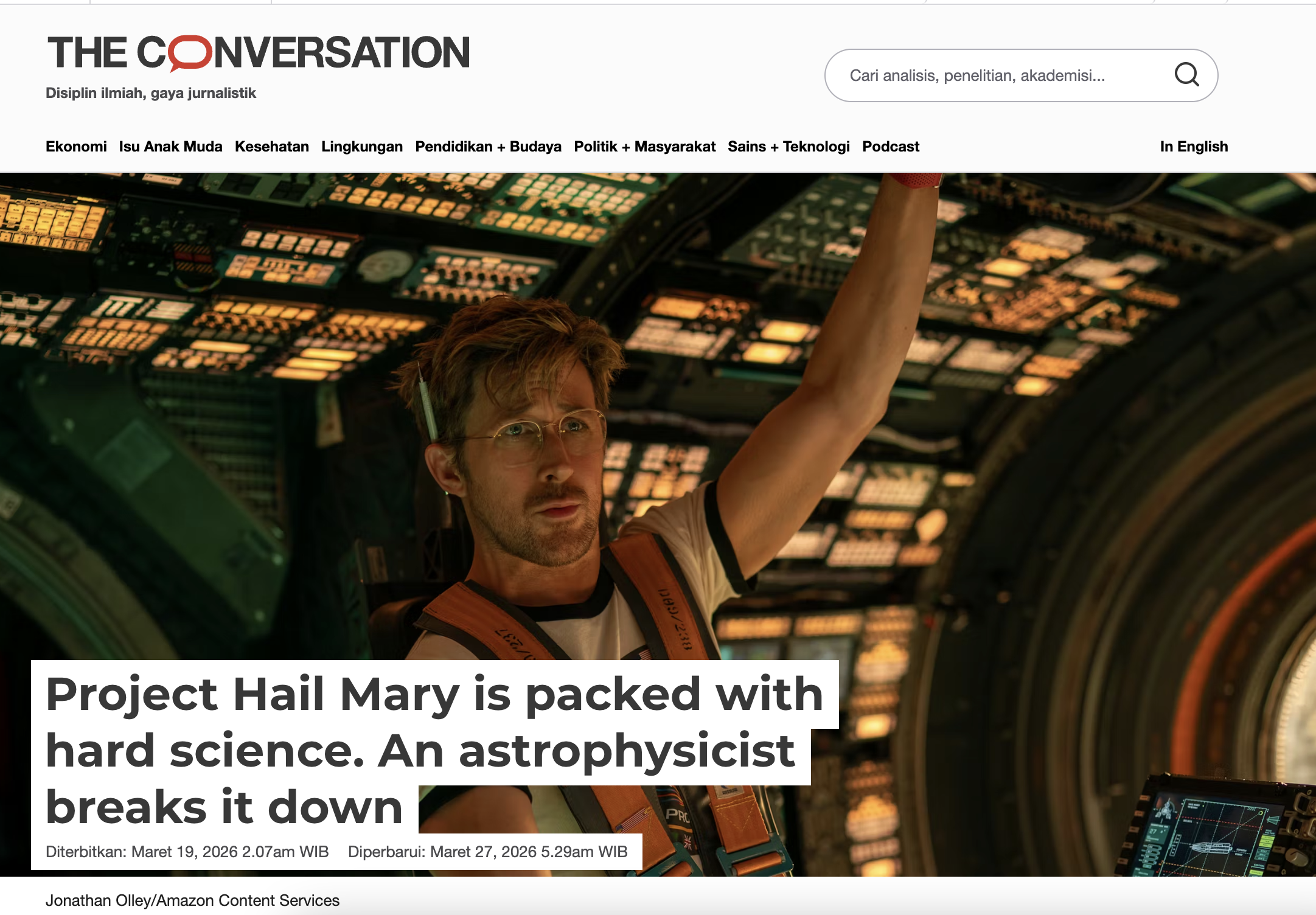
And Project: Hail Mary does contain accurate science. We’ve got time dilation as predicted by Einstein. We’ve got the actual physics of rockets, orbital mechanics, spectrostopy, although there’s a lot less about “mass ratios” than the book. We even get some convergent evolution.
And the many, many, *endless* torrents of think pieces from the corporate media applauding Project: Hail Mary for being based on “solid science” are correct.
But are, like the lyrics of Chad Kroeger, beside the point.
Because, like most science fiction, the science in Project: Hail Mary depends on accepting a fantastical premise, the Astrophage. In reality it is not possible to convert matter to energy 100% efficiently.
If we were really being scientifically rigorous we would have to admit that Ryan Gosling speeding to Tau Ceti in a starship is no more realistic than flying on the back of a dragon.
So, yes, if you can handwavium aside the Astrophage you can believe that what you like about Project: Hail Mary is its HARD scientific realism.
When what you really like is that it’s a lovely fantasy.
A Male Pattern Fantasy.
#
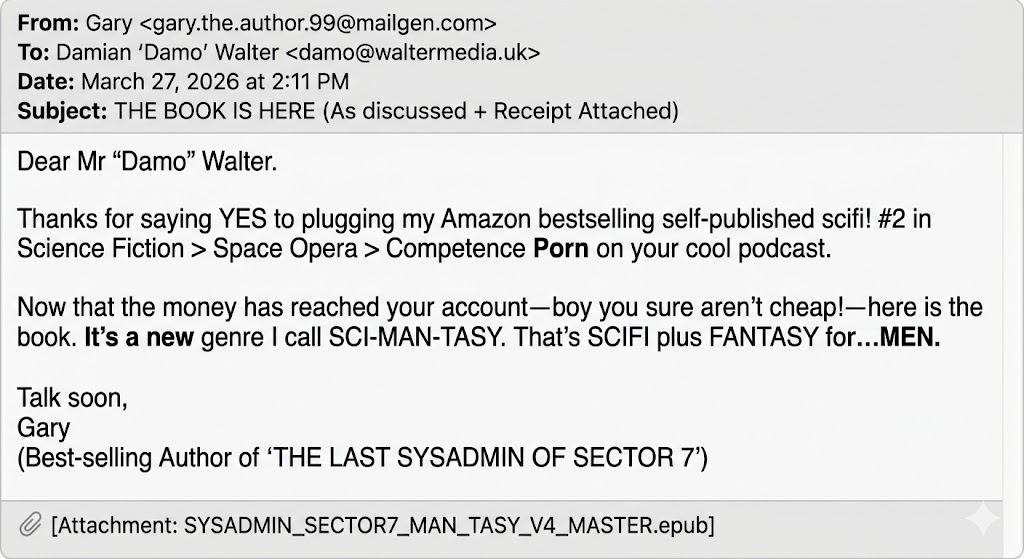
Dear Mr “Damo” Walter. Thanks for saying YES to plugging my Amazon bestselling self-published scifi! #2 in Science Fiction > Space Opera > Competence Porn on your cool podcast. Now that the money has reached your account – boy you sure aren’t cheap! – here is the book. It’s a new genre I call SCI-MAN-TASY. That’s SCIFI plus FANTASY for…
What the f…
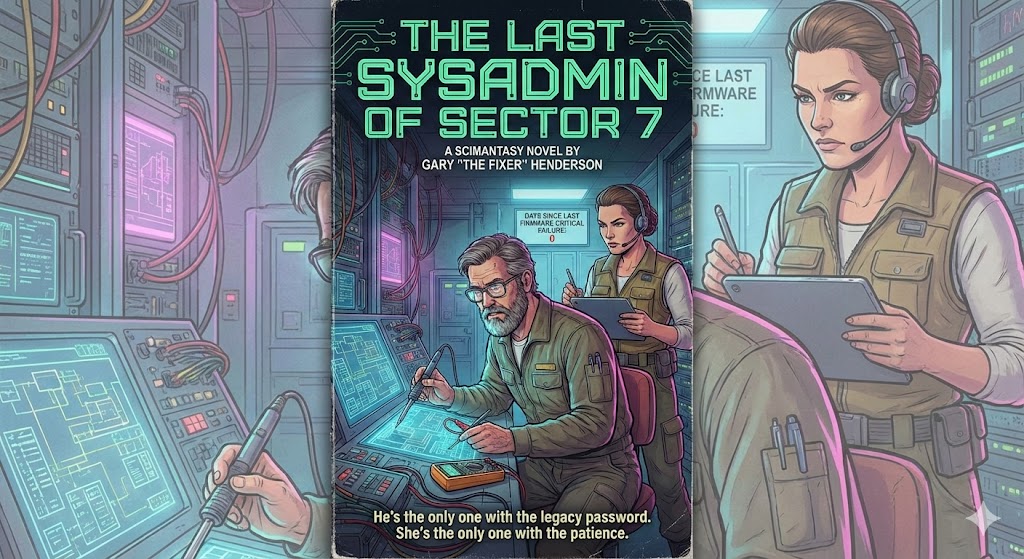
In the grim darkness of Sector 7 only one man knows the password. That man is Gary “The Fixer” Henderson, the Last Sysadmin, and that password definitely is NOT Admin123.
Bestselling Kindle self-published author Gary Henderson…yes the author and hero DO have the same name…has written the kind of book that men who solder things will love.
And features a quite a lot younger woman who starts as an authority figure but eventually admits Gary’s greater technical expertise.
Do they get locked in a dark server stack together? Of course they do.
It’s a book. It’s available. It has a front, a back, and a statistically significant number of adverbs in the middle. I’ve been paid. You’ve been told. The transaction is complete.
It’s scifi. It’s romance. It’s fantasy. It’s Sci-MAN-tasy.
Buy it on Amazon. Or don’t. The wire transfer is non-refundable, Gary.
#
Now at this point, some of you, specifically those of you currently wearing a t-shirt that says I F*ing Love Science
might be feeling a twitch of cognitive dissonance.
You’re thinking, “But Damo…Andy Weir’s book isn’t fantasy. There are no elves in it. There isn’t a single Orc. Nobody spends forty pages describing a stew made by a halfling. It’s science! It’s got maths in it. It’s got the specific tensile properties of Xenonite!”
We have been conditioned by the staggering cultural influence of JRR Tolkien to believe that Fantasy is a “genre”, a genre of swords, dragons, and those unnecessarily complex maps of continents that look suspiciously like a slightly melted version of Western Europe.
But fantasy is not a setting.
It is a psychological function.
Fantasy…according to Sigmund Freud, the man who charted the Unconscious from whence all fantasy comes…fantasy is simply wish fulfillment.
Fantasy is the psyche’s attempt to resolve a *lack*. It is a narrative scaffold built over a hole in the self.
A young woman dreaming of marrying a prince, when really she will end up married to a frog, is fantasising. A boy imagining he’s a powerful hero when, a few years later, he will die in a trench is lost in fantasy.
We create fantasies of lives we will never live, and things that will never happen.
Almost all popular storytelling is fantasy, especially the stories presented as “real”.
James Bond isn’t an MI6 agent, he’s Lancelot in a tuxedo.

Succession isn’t a show about powerful businessmen. It’s a fantasy for people who want to be powerful but also want to feel superior to the powerful.
Consider “The Great British Bake Off”. Does anyone really care who makes the best jam tart? No. This is a show for British people who live on a small island covered end to end with Tesco Metros who want to taste a Britain that exists only in fantasy.

Fantasy is at its most potent, its most dangerously infectious, when it is hidden.
When it’s tucked away behind the upholstery of “realism.” When it wears the camouflage of technical data.
When it is encoded within the symbolism of science.
Encoded in Project: Hail Mary is one of the most powerful and archetypal of all human fantasies.
The world is terrifying. The world is unpredictable. Reality is pure, incomprehensible chaos.
But I, the hero. We, humanity, can bring order to the chaos.
With the correct equation. The precise knowledge. The right actions performed at the perfect time we
man
can take power over the chaos.
And Hard SF is the perfect blanket of “realism” to disguise this fantasy.
The equations, the rocket engines, the space suits, the blinky blinky lights. They all lull us men into the belief that we’re watching an extrapolation of scientifically verifiable REALITY.
When really we’re escaping into fantasy.
Because all science fiction is fantasy. Fantasy that’s been to community college, taken Physics 101 and is now pretending it knows the secrets of reality.
“Hard SF” is not about the science. It is about the feeling of the science. It is the fantasy that the universe is not a chaotic, indifferent void that will eventually erase every trace of our existence until we are as forgotten as Ozymandias’s left leg.
The fantasy that the universe is a Logic Puzzle. And, this is the crucial bit, that we humans have the right-shaped brain to solve it.
Most science fiction is just fantasy with a more rigorous filing system. A symbolic encoding to make the fantasy palatable to men who don’t know, or can’t admit, they want fantasy.
Male Pattern Fantasy (MPF)
is not a static object. It is a modular narrative software that updates its “skin” to match the user’s increasing level of cynicism and decreasing level of testosterone.
From our first Saturday morning cartoon to when we die in a care home, clutching a special edition BluRay of Transformers : The Movie.
It’s the same fantasy, isn’t it? It’s just the same one. Over and over.
It just changes costume so we don’t feel quite so pathetic for still believing in it.
The Three Ages of the MPF
To understand why Project: Hail Mary is so addictive to us men we must look at the three stages of the MPF:
Stage 1: The Titan (The Toddler/Child): This is the fantasy of Physical Might. It is the “Hulk Smash” phase. The world is big and scary, so you imagine yourself being bigger and scarier. It is the simple, honest desire to knock over a skyscraper because your mother wouldn’t let you have a second chocolate buscuit. It’s a bit crude, but at least it’s honest.

Stage 2: The Maverick (The Adolescent): Here, the fantasy evolves into Social/Sexual Mastery. This is the Han Solo phase. The “Rebel Without a Cause” (but with a very expensive leather jacket). The fantasy is that you are “cool,” which is a state of being where you are incredibly important but also pretend not to care about anything. You are misunderstood by the “system,” but…and this is crucial…you are eventually vindicated by a princess.

Stage 3: The Architect (The Young Professional): As the man enters the workforce, the fantasy shifts to Professional Dominance. This is the “Tech Bro” or “Tycoon” phase. It is the dream of building an empire, of being the smartest guy in the boardroom, of disrupting an industry with an app that basically just reinvented the bus but with more venture capital. It’s about being “The Man with the Plan.”
The Mid-Life Pivot: The Indispensable Specialist
But then, something happens. You reach your forties. Your back starts to hurt for no reason. You realize that you aren’t going to be a superhero. You realize that “The System” doesn’t actually care if you’re a maverick; it just wants you to fill in your timesheets. You realize you aren’t the Architect of a New World; you’re a middle-manager in a world that’s already been built and is currently falling apart.
This is the Mid-Life Crisis of Relevance.
And this is where Project: Hail Mary arrives like a miracle. Because Project Hail Mary is the MPF for the Mid-Life specialist.
It moves away from the “Big” fantasies of youth and into the “Small” fantasy of Specific Competence.
It tells the reader: “Yes, you are isolated. Yes, you are just a school teacher or a mid-level administrator. But, under the right circumstances, your ability to remember the boiling point of liquid nitrogen makes you the most important human being in the history of the species.”
It is the fantasy of being Indispensable.
The teenager wants everyone to look at him. The mid-life man just wants to be the only person who knows how to fix the Wi-Fi.
We want to be the “Expert.” Just leave us alone in our shed to do our thing.
And Ryland Grace is the ultimate Expert. He is the man who is “left alone” to do his work, and in doing so, saves everyone. It’s a retreat into a shed that happens to be the size of a starship.
Not all men have the Male Pattern Fantasy.
Some men live the fantasy.
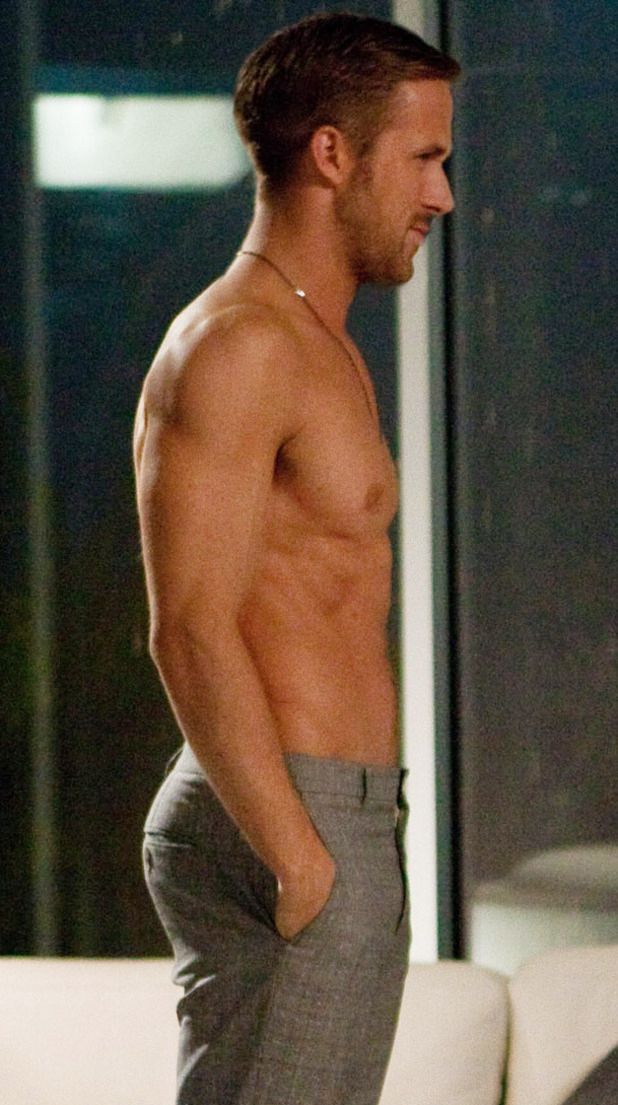
Some men walk into a room and everyone pays attention. Some men are the 1% on Tinder that get 99% of the dates. Some men are 6’2 with a chad jaw.
Some men are Ryan Gosling.
So while Ryan Gosling is as great in Project: Hail Mary as he is in everything.
He’s also a walking contradiction.
Because Hollywood has a problem. A problem with the human face. Because to be bankable a Hollywood movie must feature the 1% of human faces that other humans want to gaze at.
Not the real face of Ryland Grace. Our middle-aged, socially isolated, slightly neurotic middle-school science teacher who has retreated from a failed academic career into a life of quiet, solitary despondence.
Does not have the face, or waistline, of Ryan Gosling.
A face whose bone structure is so aggressively symmetrical it’s actually a violation of the second law of thermodynamics. A stomach so ripped it can only have been carved from a single, very expensive block of artisanal soap.
If Project: Hail Mary was really based on scientific realism the laws of physics would dictate we cast in the role of Ryland Grace.
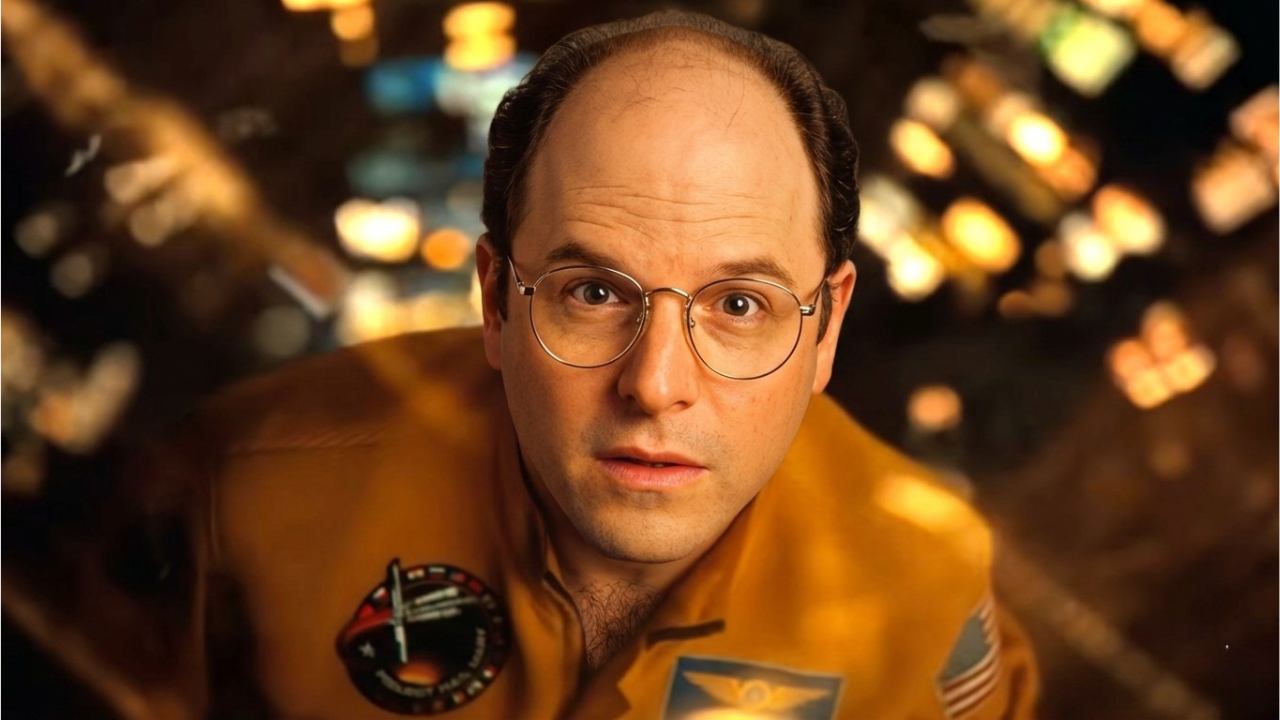
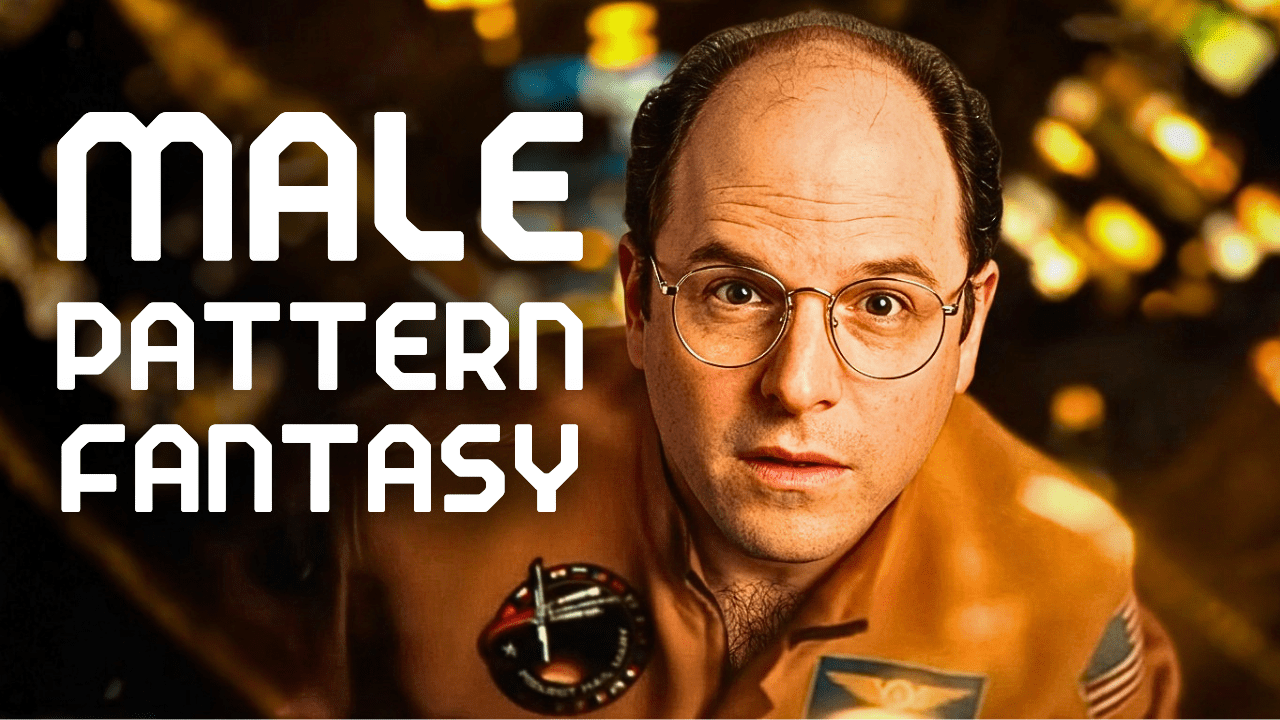
Jason Alexander.
By no means an ugly man. But the kind of good looking man Hollywood casts when it wants to tell us mere mortals that this character is one of us.
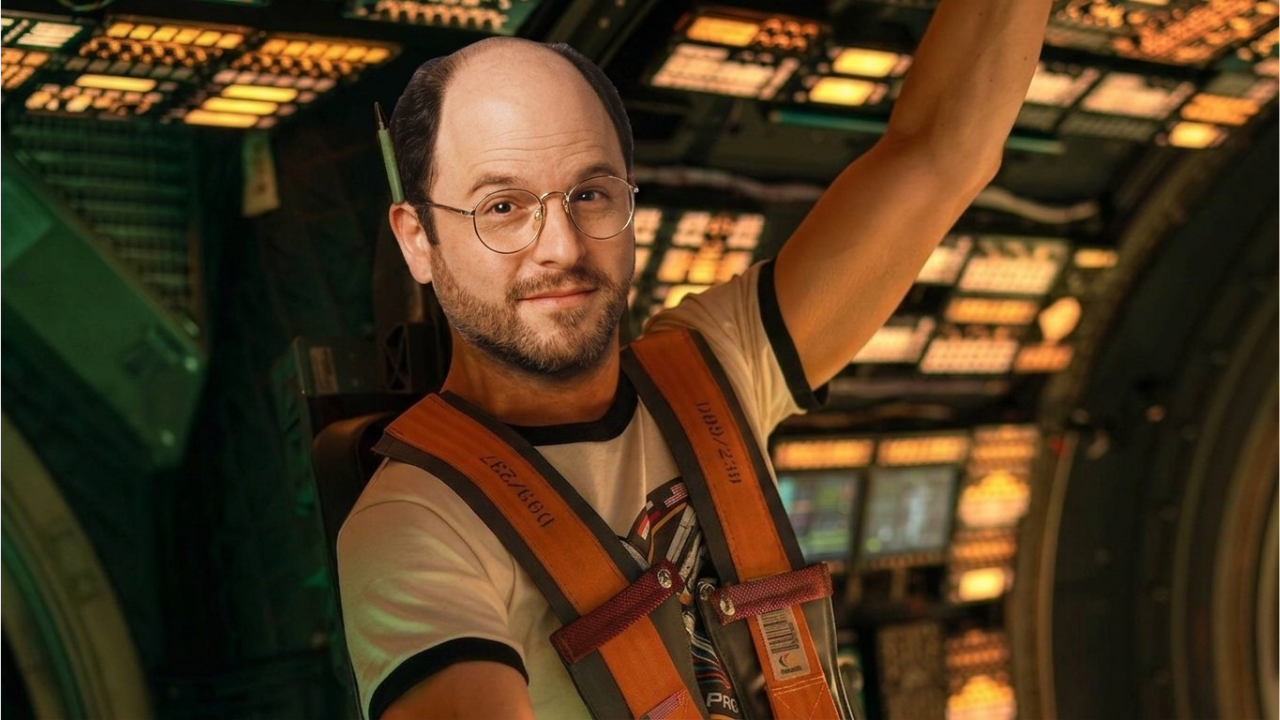
A man who actually looks like he’s spent his life in a windowless laboratory arguing with a peer-review board about the cellular respiration of extremophiles.

The ideal Ryland Grace is not a man who looks like he just stepped out of a Tag Heuer advertisement after six months in a coma.
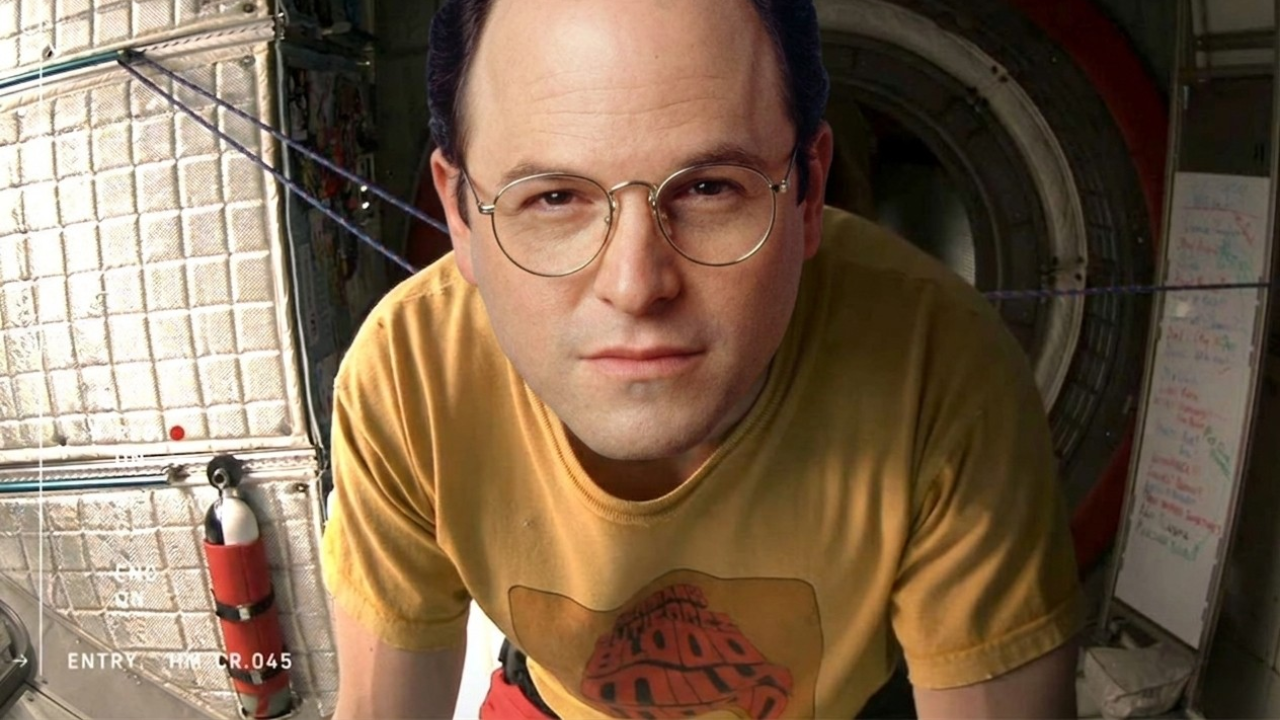
But Hollywood cannot give us the Costanza. They cannot give us the man who actually represents the demographic buying the book. Or watching the movie. They must give us the Gosling, because the Male Pattern Fantasy requires that we are not ourselves.
We are Ryan.
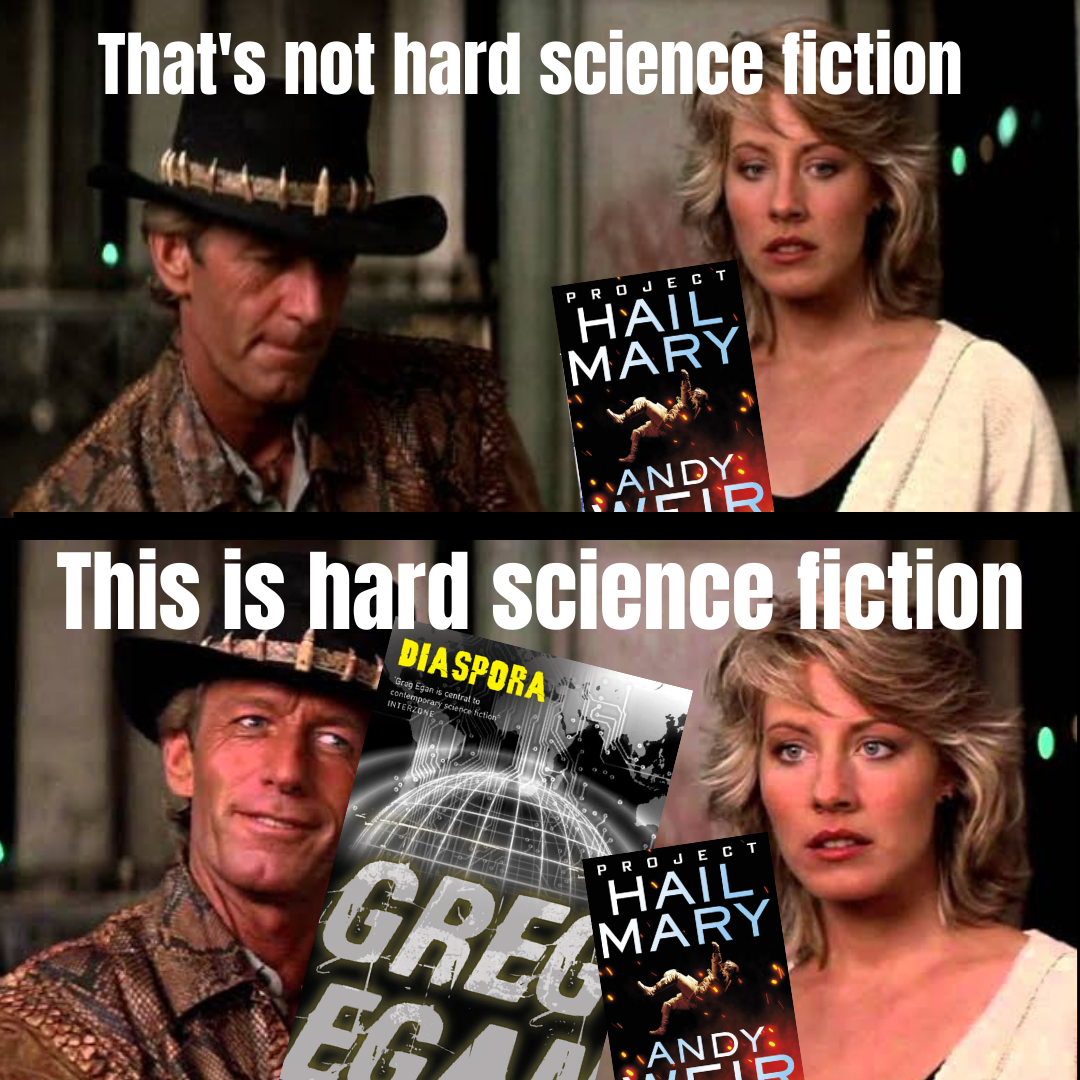
Think of Paul Hogan in Crocodile Dundee. The mugger pulls a sensible flick-knife; Hogan pulls a blade the size of a surfboard.
Project Hail Mary is the flick-knife…a shiny, user-friendly tool for the city boy. If you want the bowie knife…the “Hard SF” that actually lives up to the name…you have to look at the books that are
Aggressively
Anti
Male Pattern Fantasy
Books that don’t make you a “somebody” but treat you like the damp patch of organic chemistry on an indifferent rock you actually are.
The Invincible by Stanisław Lem
The “Anti-Rocky.” No “Engineer’s Bromance” here. The alien is a necrotic, non-sentient evolution of micro-machinery that has zero interest in your biology PhD. It is “Hard” because it acknowledges that the universe is unfathomable, not a logic puzzle designed for your ego to solve.
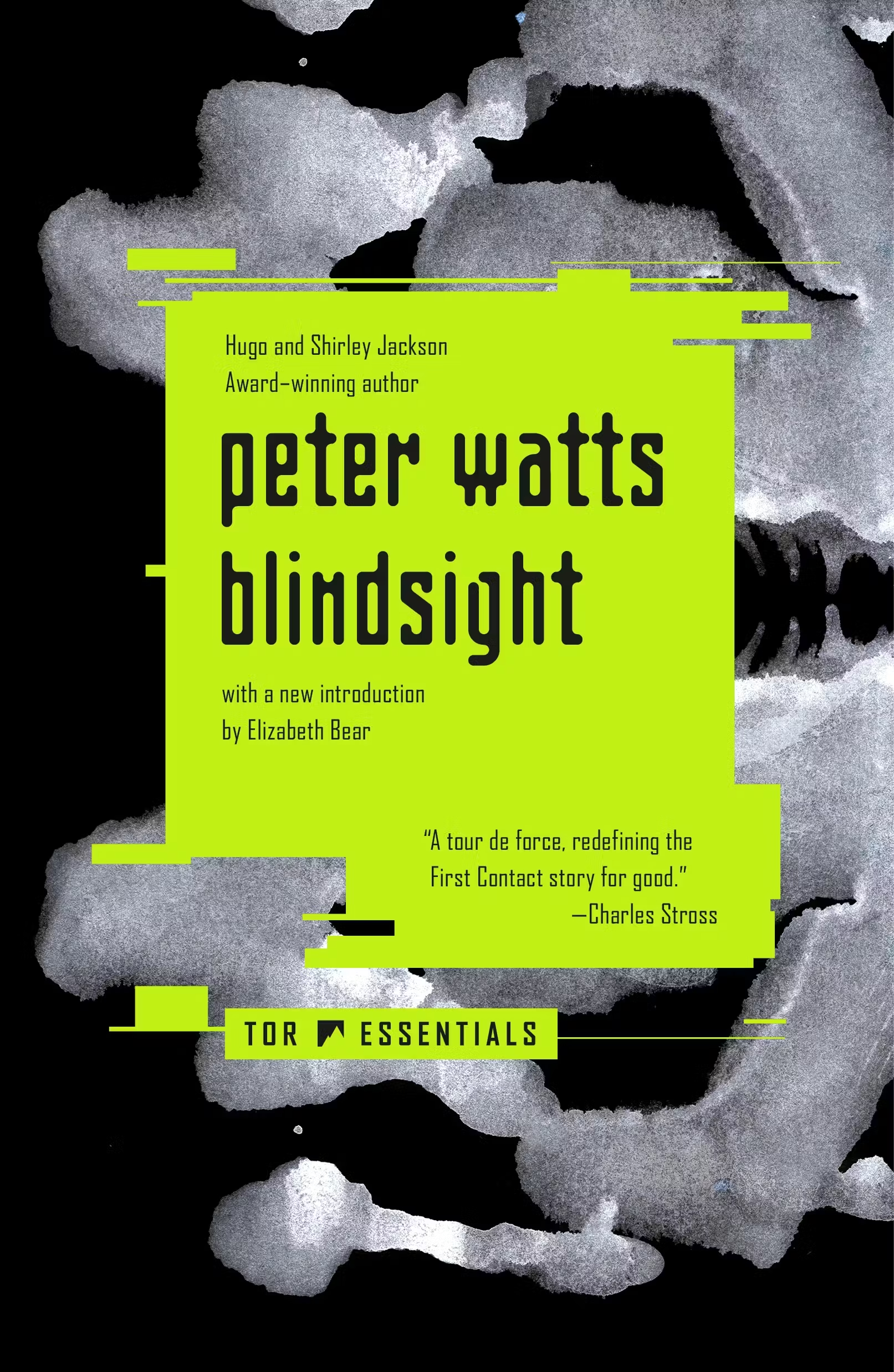
Blindsight by Peter Watts
The “Anti-Special-Brain.” While Weir suggests your intellect is a superpower, Watts argues that consciousness is a biological mistake…a redundant “user interface” that makes us slower than the hyper-efficient, non-sentient entities out to erase us. It’s the Male Pattern Fantasy’s nightmare: a world where being “Indispensable” is an evolutionary disadvantage.
The Fountains of Paradise by Arthur C. Clarke
The “Monolith of Futility.” Often misread as a triumph of engineering, it’s really about the cold, Newtonian reality of the “Great Man.” Vannevar Morgan builds a space elevator—the ultimate phallic monument to relevance—only to realize the universe is perfectly happy to let him die of a heart attack while his “Works” simply obey the laws of tension and gravity.
These books don’t care about your ego; they care about the math.
#
And so, we arrive at the sands. The “lone and level sands.” The part of the poem where men’s deepest fears, and wildest fantasies, collide.
What is the Hard in Hard Science Fiction actually protecting?
Because it is protection. It’s armor. It’s a lead-lined bunker for the ego.
If we look at the core of the Male Pattern Fantasy, we find that it isn’t powered by ambition. It isn’t powered by a genuine desire to save the species. It is powered by a singular, cold, vibrating terror.
The terror of the Void.
The fear of Irrelevance.
The ego of the Nobody.
The great, unspoken fear of the modern man, the man who has done everything “right,” who has the degree, the career, the sensible shoes, is that we are, fundamentally, a Nobody.
That we are a ghost in a machine we didn’t build and don’t control.
That if we were to vanish tomorrow, the only thing that would change is that a few spreadsheets would go unpopulated and a cat would be slightly confused for forty-eight hours.
This is reality. The mundane reality of being a finite, transient flicker in eternity.
And Project Hail Mary is the escape from that reality. It is a narrative “Relevance Injection.” It takes the “Nobody”—the middle-school teacher, the failed academic—and it makes him the Sole Saviour of Humanity.
And un-humanity, in this case.
It’s a lovely fantasy, isn’t it? The idea that humanity needs us. Because this is our secular salvation. That if we do something “Big” enough…save a planet, build a monument, write a best-selling book about a man saving a planet…we can find meaning in the void.
But we can’t, can we?
Even Ryland Grace…the man who saved two civilizations with a bit of tape and a basic understanding of light-curves…is ultimately just another Ozymandias.
He builds his Works. He saves the Sun. He stands on a pedestal in the Eridani system. And he thinks, in an unassuming Ryan Gosling kinda way
“Look on my Works, ye Mighty, and despair!”
And the universe. The actual Hard universe, the one that doesn’t care about your PhD or your bromance with a spider-alien. That universe.
Doesn’t even look back at you with a blank, Newtonian stare.
There is no stare. There is no it. Reality doesn’t even not know you exist. Reality is void.
Project: Hail Mary is a beautiful lie.
It tells you it’s a work of rigorous scientific realism. It flatters you with the symbolism of science. It offers to show you the void.
Then it delivers a lovely fantasy. Just the same fantasy as every child’s bedtime tale, every fairy story, every superhero saga.
Project: Hail Mary isn’t hard science fiction.
It’s pure fantasy.
Look on my Works, ye Mighty. And… well, maybe just have a nice cup of tea instead. It’s probably more realistic.
Listen to the podcast audio
 Damien Walter