It’s 1990. This morning I found an open door in the shopping centre of the dull commuter town I live in.
Beyond the door are a series of large empty rooms, poorly lit, with large boxes.
Backrooms.
I phoned my friend Matthew Woods. Woodsy. He pedaled over his BMX and together we’re going to explore the rooms.
I’ve made it to the third room but Woodsy has disappeared. Now I’m hiding behind the boxes as footsteps approach.
What are these rooms? Where do they lead? Who is coming for me?
Woodsy’s pudgy face appears over the box, and his annoying older brother Rick who works in Dixons the electronic store. They’re laughing.
“Damo you twat” Rick roars “you’re in the backroom of Dixons”.
Because there are no liminal spaces.
Only backrooms.
Become a member to watch the full video essay
Mainstream cinema is choking on its own product.
Every movie is a perfect 3-act structure, complete with Inciting Incident, Rising Action, Crisis, Climax and Resolution.
Every hero has a meaningful journey that will hit at least nine of Joseph Campbell’s seventeen stages.
Every location up to and including alien worlds and Heaven above is an exercise in logical worldbuilding realised as a CGI model in a supercomputer.
Everything is a reboot, a prequel, a mashup and an exercise in fan service.
And now even the most normie of normie audiences are sick of the product.
When along comes a movie that hurls The Writer’s Journey in the bin and treats narrative structure like dated fashion trend its refusing to wear.
A movie that follows characters who have no desires to drive them, whose only arcs are traced through non-euclidean liminal spaces.
And a movie whose one notable location is the kind of storage room found behind most large shops.
The Backrooms, directed by 20 year old Kane Parsons, extending his super successful webseries, itself inspired by the “creepypasta” backrooms meme.
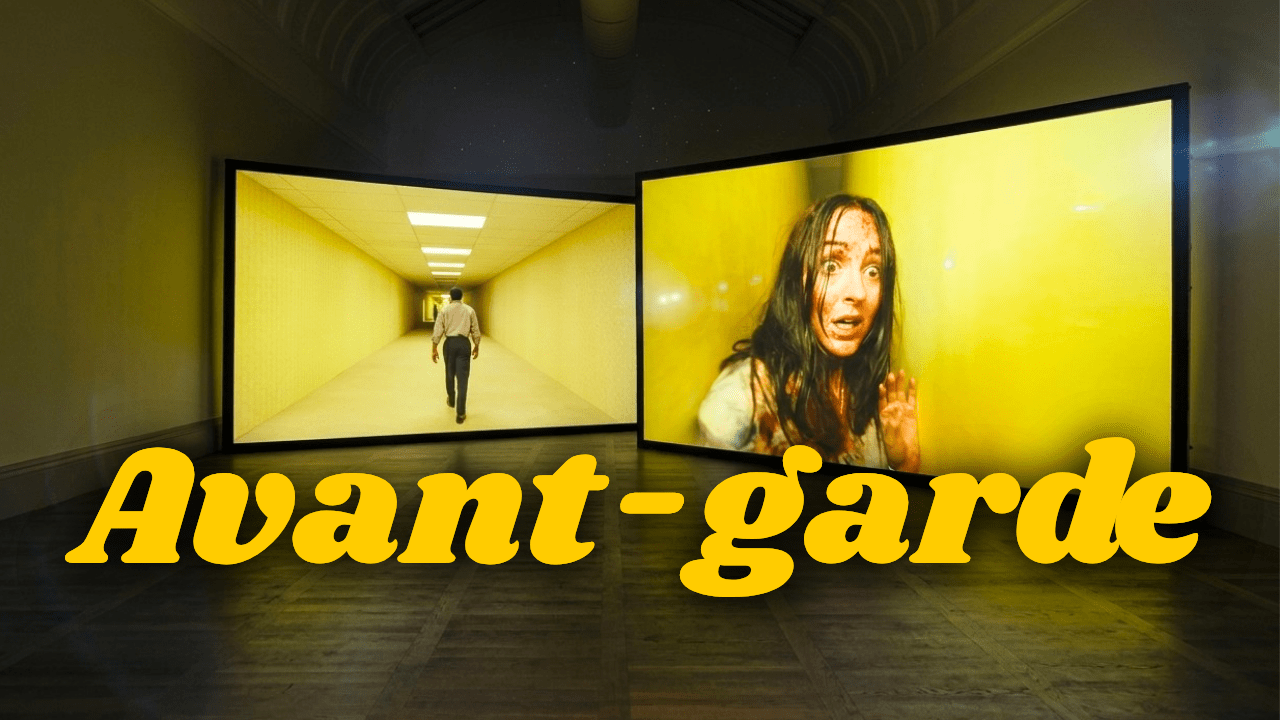
A movie that … well … is basically a mid 1990s video art installation straight out of MoMA or Tate Modern.
But now in a multiplex near year.
Because Backrooms is avant-garde art for normies.
Hey guys. Just taking a moment to share a personal confession, that I like many of you often struggle to get a good night’s sleep…
…because of the crushing weight of living in capitalist realism.
Until I found the solution…and no it’s not one of those “sleep trackers” that induces the exact cycle of low grade anxiety guaranteed to shatter your rest.
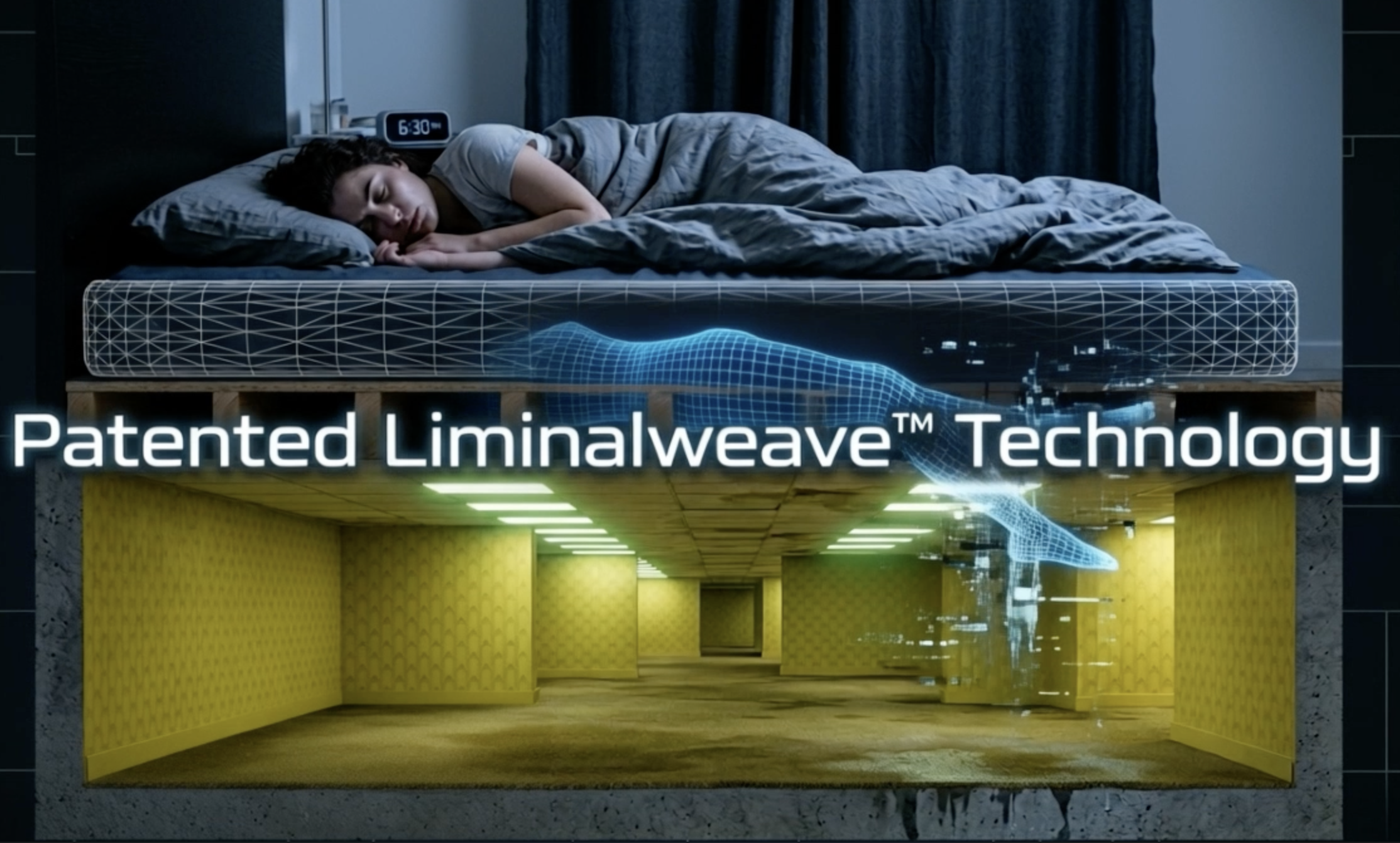
Introducing the NoClip mattress from BackroomBeds. Their patented Liminalweave technology allows one half your body to rest in the dreary reality of having to get up at 7:30am for another day in the office, while the other half clips off on an adventure in non-euclidean spacetime.
You won’t feel any better rested but you will at least feel some hope that there is anything, anywhere beyond another trip to the shopping mall.
Get your NoClip mattress from BackroomBeds by walking through the wall of any good basement near you.
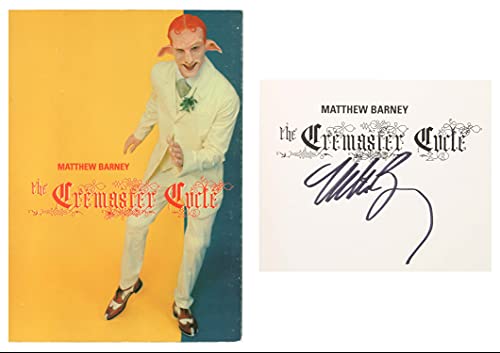
Matthew Barney’s Cremaster Cycle is basically Clive Barker’s Hellraiser but made for art galleries.
Around the mid 90s digital video cameras and projectors began to allow gallery artists, working with tiny budgets, to create visual art using video.
Video installation art went back to at least the 1960s, when the Sony Portapak became the first consumer grade video camera.
Artists like Nam June Paik created installations using bulky CRT screens, often stacked and arranged into sculptural forms.
But digital projectors allowed installation and cinema to merge. Artists like Stan Douglas and Doug Aitken created vast, multi-screen installations of cinema grade imagery.
Of works that were non-narrative, instead documenting fragments of real lives and locations, or creating fantastical worlds shown only in brief glimpses.
Works that were, for lack of a better term, avant-garde.
Avant-garde art is a term almost guaranteed to set most people’s teeth on edge.
It’s one of those poncy French words used by English speakers to sound intellectual.
Without diving into the full etymology the avant-garde are the forward guard or vanguard.
Avant-garde art then is like the cutting edge of art. And, crucially, avant-garde art is doing, ahead of schedule, what mainstream art will be doing thirty years later.
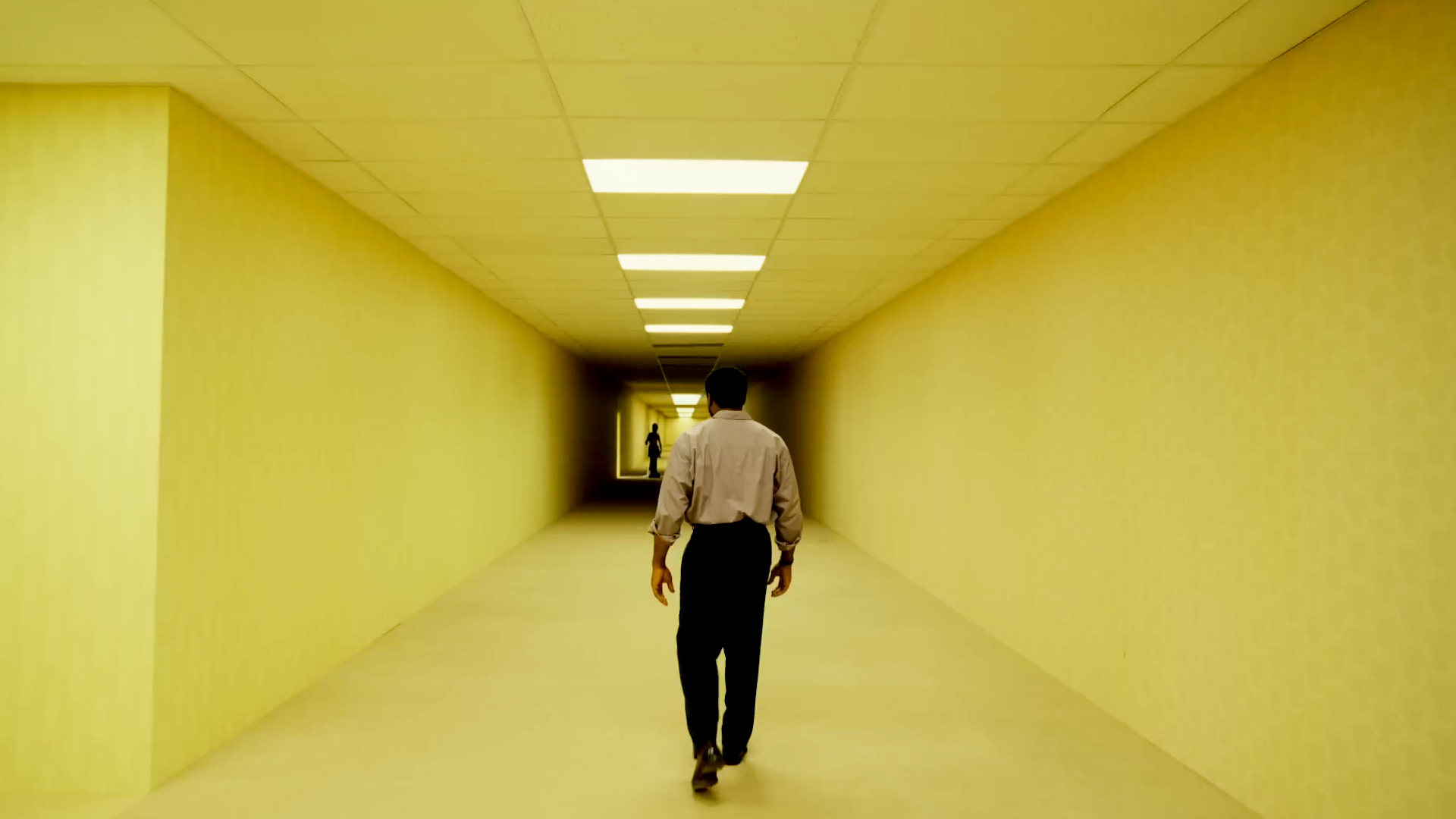
So it’s not at all surprising that Backrooms in 2026 looks like video installation art of 1996. That’s exactly what avant-garde theory would predict.
Backroom’s excellent soundtrack is less avant-garde than its non-narrative narrative. Ambient and electronica mainstreamed its sound in the 80s and 90s.
But when William Basinski pioneered experimental drone music using magnetic tape to tape recordings in the 1970s…
…or when John Cage’s 1952 composition 4’33” confronted audiences with 4 minutes 33 seconds of silence…
…or when composer Pierre Schaeffer used real world sounds of cars and planes as “instruments” in the 1940s…
…these were truly avant-garde art. But today their sound is entirely mainstream in the film soundtracks of Trent Reznor and Atticus Ross or even Hans Zimmer.
Once you realise how regularly avant-garde art leaps into the mainstream you realise that it is nothing to fear.
It’s kind of crazy to remember that the cinematic jump-cut was considered avant-garde when Jean-Luc Goddard used them in 1960s Breathless. Today the medium of the Tik Tok short wouldn’t exist without them.
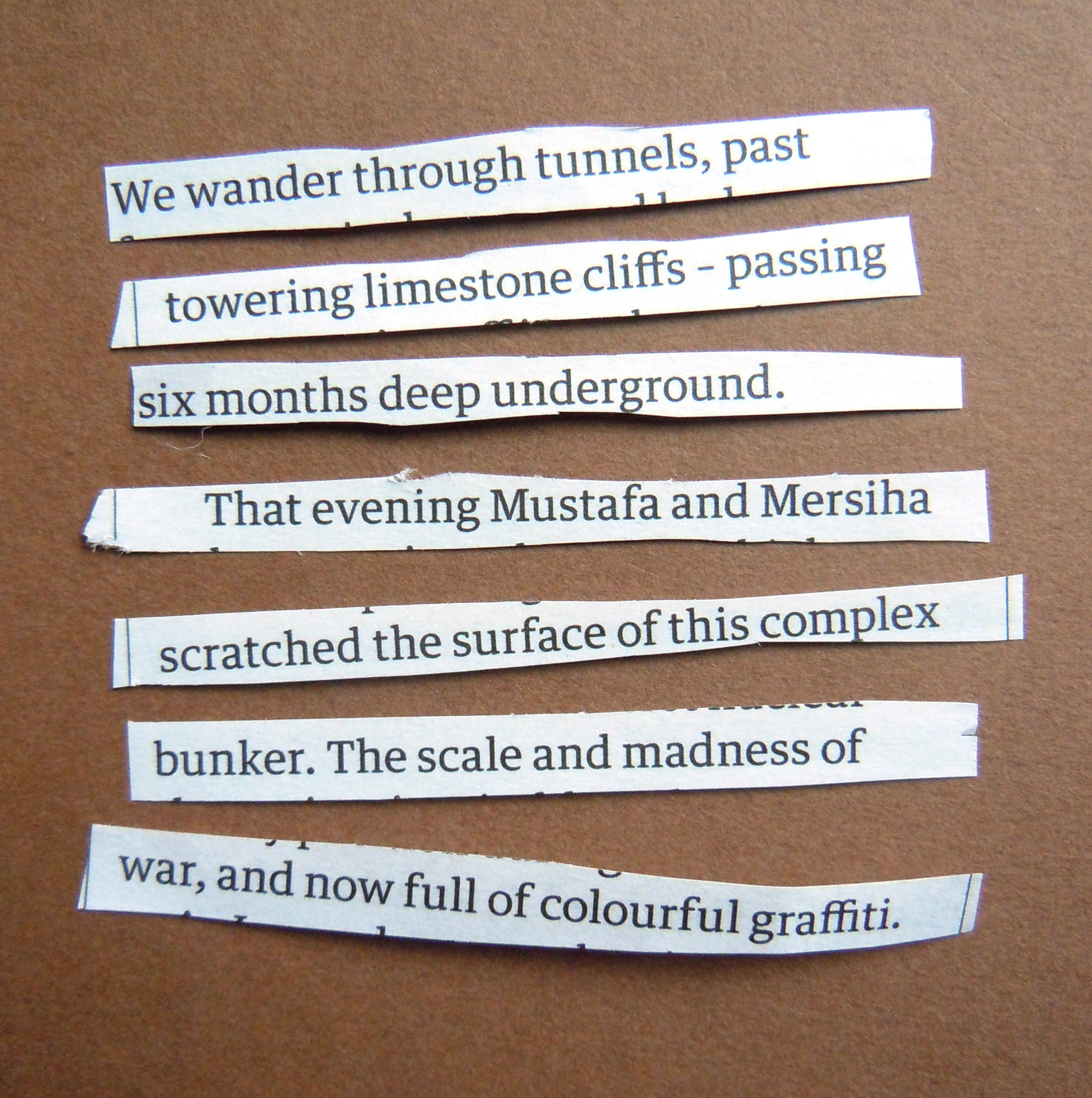
William S Burrough’s “cut-up” and rearranged pages of text still seems like a cheat to many people, but David Bowie’s song lyrics and every LLM basically do the same.
The absurdist humour of the Dada movement, and the confusing, non-narrative performances of their Cabaret Voltaire were utterly dumbfounding to the general public back in 1916.
But Monty Python put Dada on our tvs, and today absurdism seems pretty tame compared to Gen-Z shitposting and meme culture. It doesn’t get much more Dada than Pepe the Frog.
And the Dadists and 4Channers have more in than dank humour.
Because avant-garde art is not just weird art for weird arts sake and shock value. Avant-garde art is fundamentally political.
Mainstream art is and always has been there to give comfort. Mainstream culture from Homer’s Iliad to Spielberg’s Saving Private Ryan has always reassured us that reality is meaningful. That even war with all its horrors is there to give us the chance to be heroic.
But the artists of Dada were living through the mechanised carnage of World War 1. The avant-garde artists who followed saw the worst the 20th century had to throw at us. The concentration camps, the nuclear blasts, the napalm and the AR15.
The avant-garde decided that mainstream culture was bullsh*t. Reality wasn’t a 3 act structure with a redemptive character arc. Reality was fucking chaos, random events, meaningless lives and acts of absurdity. And the avant-garde made art that showed that reality.
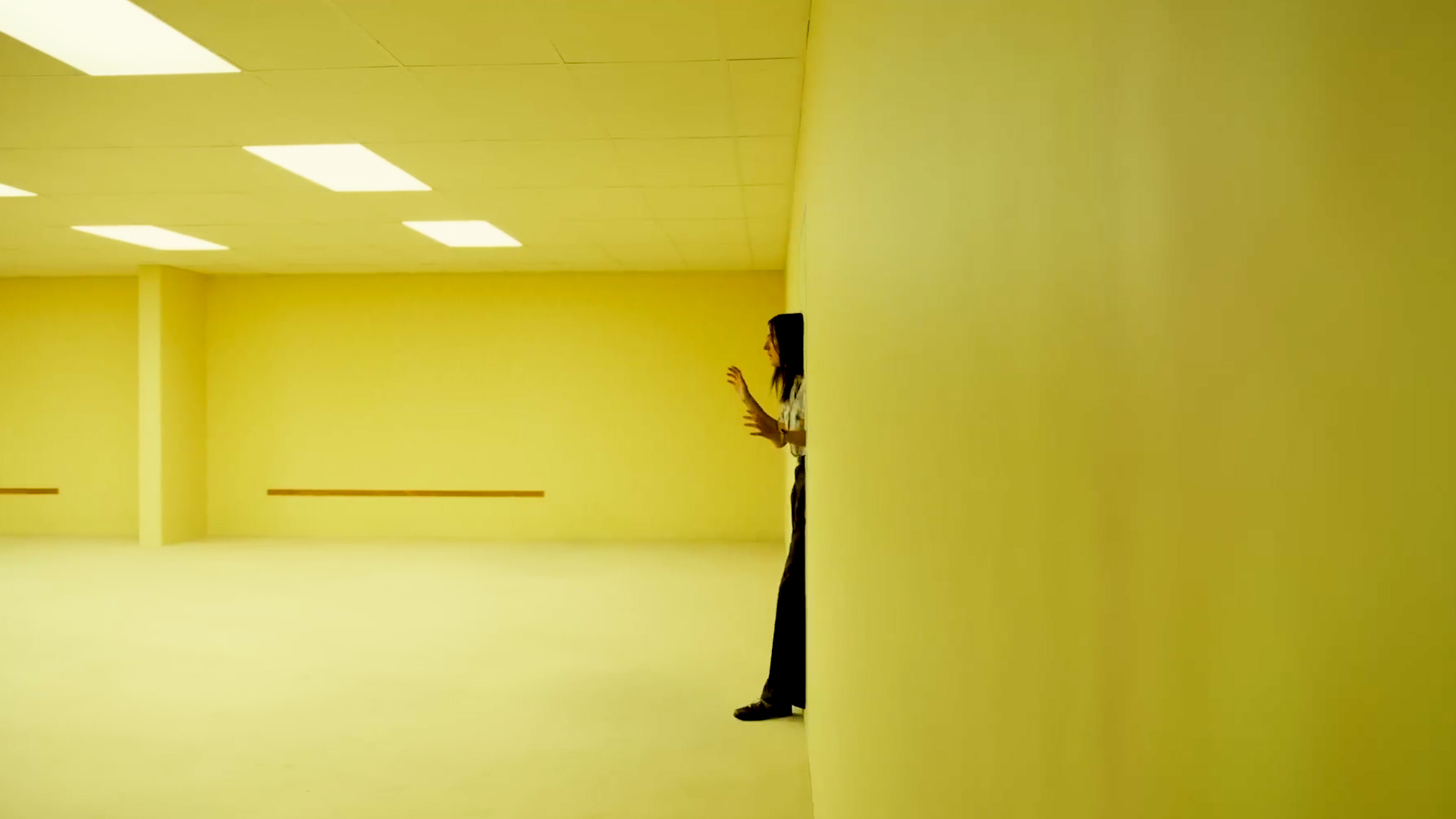
So Backrooms is the avant-garde of 30 years ago finally smuggled into the cinema for normies…
…as horror.
Backrooms certainly contains a few frights. And it’s perfectly fine to market a movie as horror to bring in the normies.
But what Backrooms trades in is less jump scares than profound dis-ease, that will dog you long after you leave the cinema.
The true literary forebear of Backrooms is not Stephen King but Jorge Luis Borges, JG Ballard and Thomas Ligotti.
The horror of Backrooms is not the supernatural monster but the bland truth that these urinal yellow spaces are much closer to our reality than most “real” locations depicted on the cinema screen.
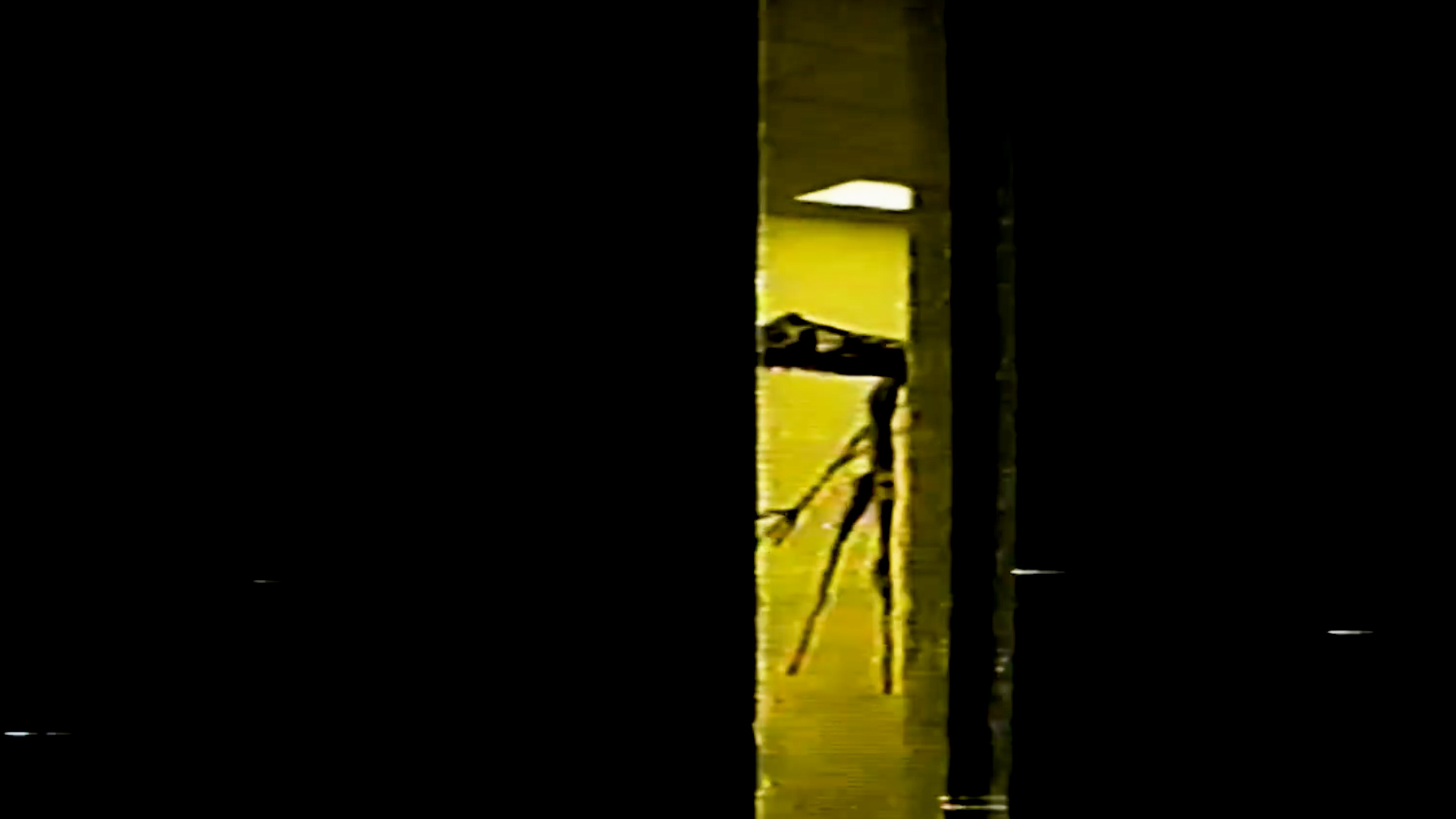
To understand the meaning of Backrooms…
…not as a complex made-up LORE…
…but as avant-garde art, imagine it projected in a gallery at Tate Modern, with one of those small white cards to explain it to the normies.
On that card are written two important words.
Liminal is the word most used today to describe Backrooms. And with good reason. But to get to the Liminal we need to go through…
…Disenchantment.
Ignorance, as they say, is bliss. For most of human history we just didn’t know shit about anything.
What’s under the ground? What are those sparkly things over head? What happens after we die? What even are we?
So it was very easy to enchant the unknown with the nouminal and the transcendent. To imagine dark fiery hell’s underground, or splendid immortal heavens above.
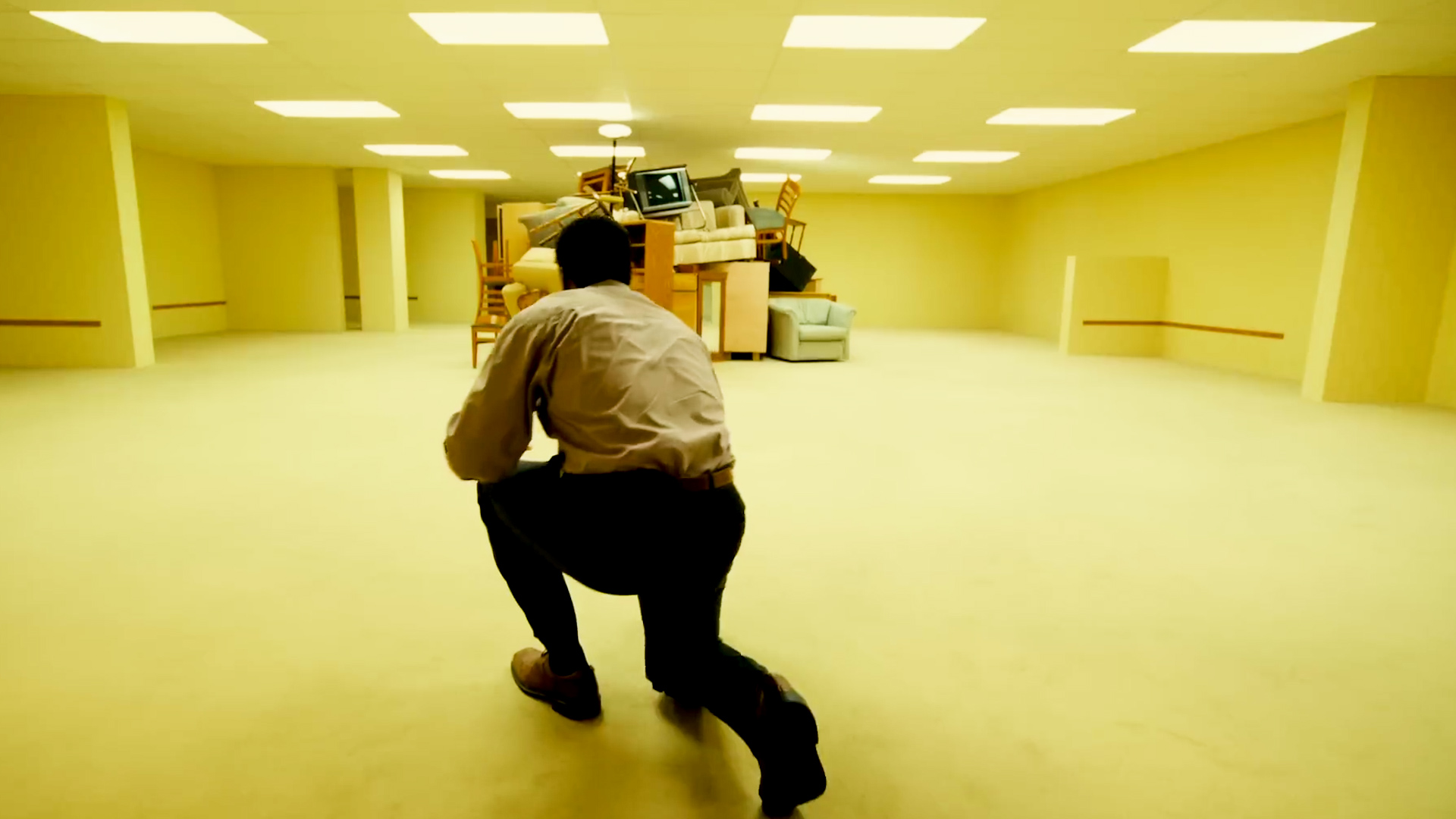
In his 1917 lecture The Vocation of Science the sociologist Max Weber described “the disenchantment of the world”.
Already by the early 20th century the power of science and reason had made it impossible to enchant the world with imagination.
We could dig into the dirt and look out into the stars. There was nothing transcendent there. There was no nouminal anywhere.
Instead, Gen-Z and their Gen-X parents, Millenials and their Boomer mums and dads, all of us alive today, have been born into what Weber called The Iron Cage.
With no other places for our imaginations to inhabit, we are trapped in a cage of rationalization and bureaucracy.
What little is left of our imagination is commodified and sold back to us as “entertainment” to keep us amused in our Iron Cage.
The Hollywood CGI slop machine mindlessly churns out old gods and old myths in new shiny outfits to comfort a humanity that has lost all belief in anything beyond the cage.
But then there is the liminal.
The state between states. For instance, the messy transition between childhood and adulthood. The place between places. The barren land between city blocks. The strip of grass between motorways. The rooms behind the furniture store. Backrooms.
The liminal appears as one of the last spaces where we can place our imagination. Even if the liminal is inhabited by monstrous entities, it’s better than yet more strip malls, housing tracts and office spaces that are our lives in the Iron Cage of the real.
Until we realise that even those liminal spaces are just the backroom of Dixons.
Normies are the people who don’t even understand they are living in the Iron Cage.
But Backrooms is giving them just an edge of a glimpse of that reality. Which has always been the task of the avant-garde.

