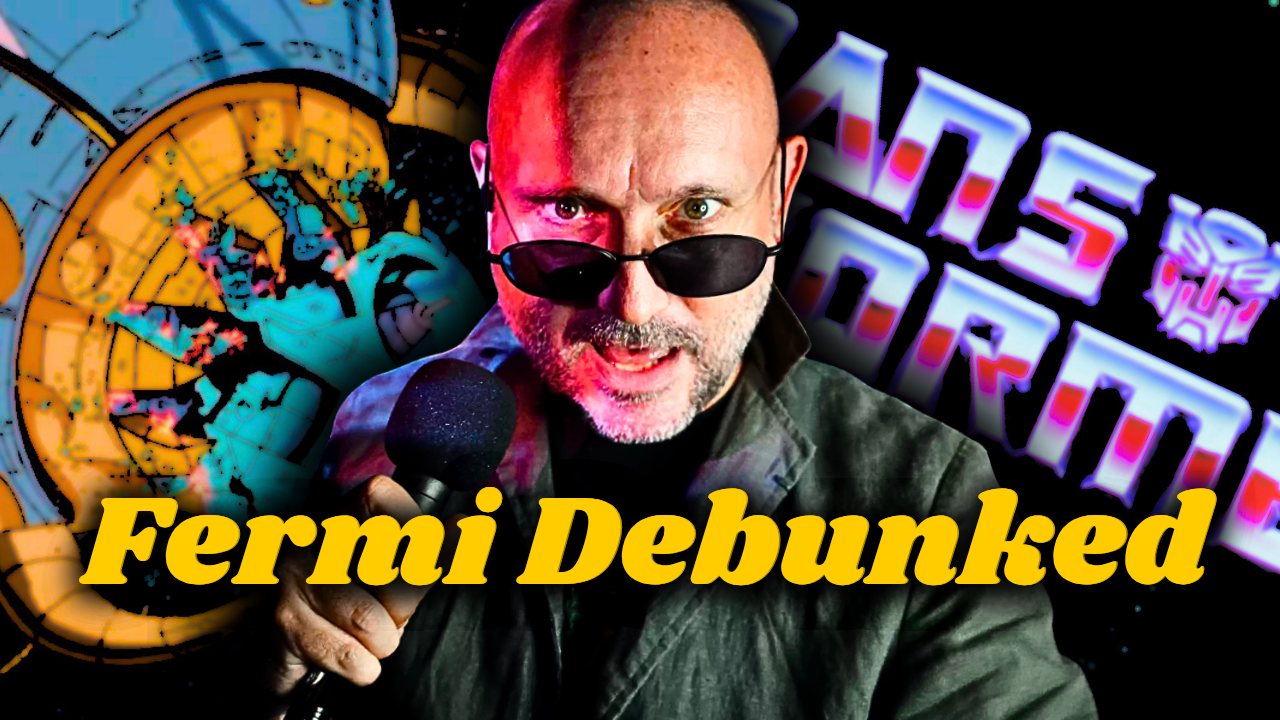
The air in the recording booth is stale. It is October 1985. Orson Welles—the greatest cinematic imagination of the 20th century, the auteur director who gave us Citizen Kane, the showman who panicked a nation with a radio broadcast—is sitting in a chair, wheezing.
He is dying.
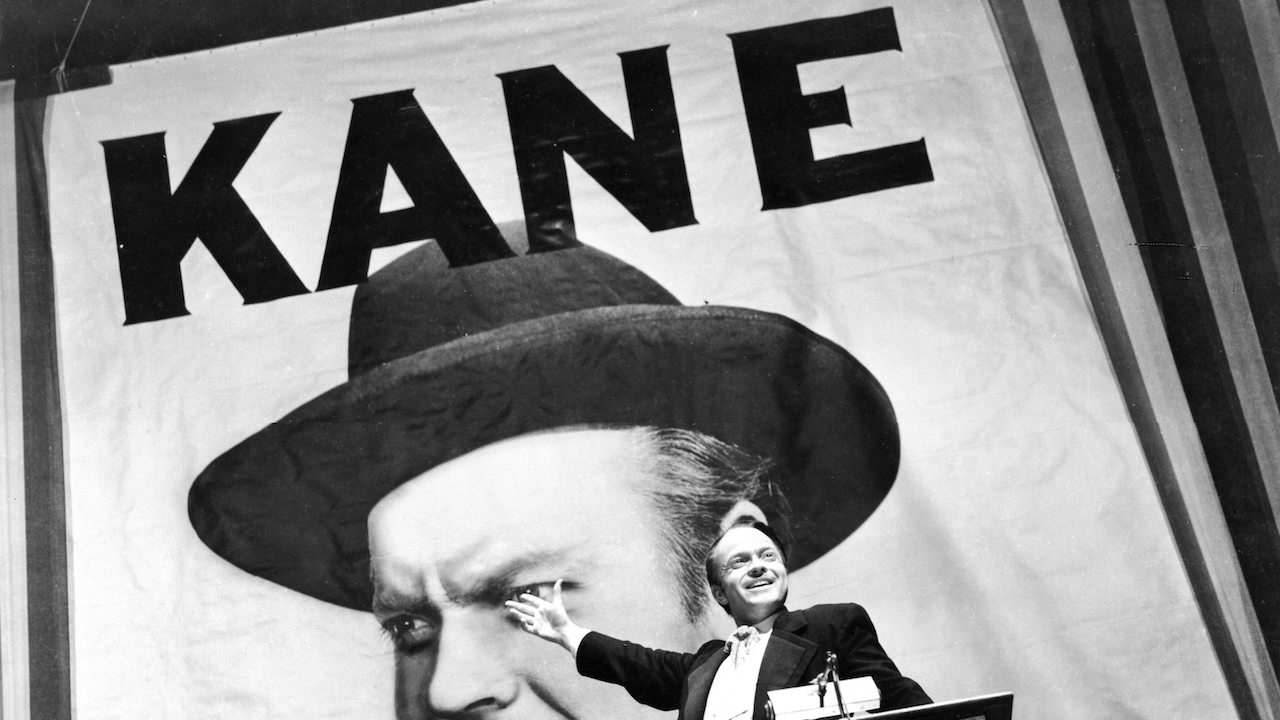
He will, in fact, be dead in five days. But right now, his final artistic act on this earth is to lean into a microphone and read lines for a feature-length cartoon designed explicitly to sell plastic robots to children.
“I play a planet,” Welles told his biographer later that day. “I menace somebody called Something-or-other. Then I am destroyed.”
Somebody called Something-or-other.
Transformers: The Movie—or to be precise, The Transformers: The Movie—was a project so hastily conceived that nobody stopped to consider that “THE Transformers: THE Movie” was a linguistic construction so awful that anyone sane would simply call it Transformers: The Movie.
The Transformers: The Movie was less of a cinematic event than a liquidation sale.
Watch the full video essay
The Vertically Integrated Psy-Op
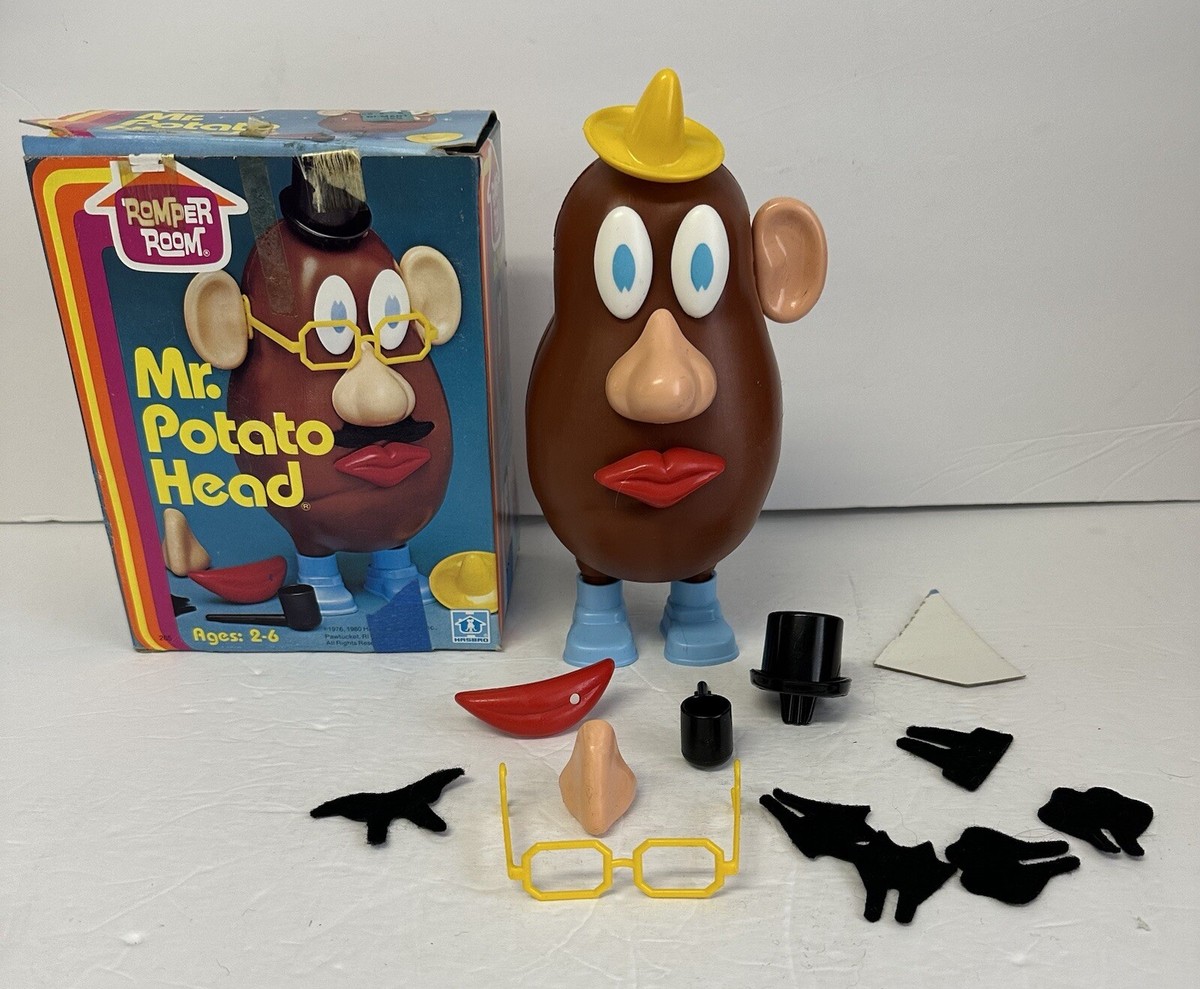
Hasbro in 1984 was sitting on a cash pile from the manufacture of plastic Mr. Potato Heads and looking for growth opportunities. Until the early ’80s, you were, for good reasons, not allowed to blast the minds of young children with 22-minute chunks of animated narrative warfare. But after He-Man proved Reagan’s FCC would never enforce the ban, Hasbro weighed in with its own animated brainwashing for kids: The Transformers.
Americans believe the “command economy” is a thing of Soviet nightmares. How charmingly naive. Armed with the profits from the plastic potato and their iconic G.I. Joe line, Hasbro executives stormed the Tokyo Toy Show and bought the rights to two competing lines of transforming mecha: Diaclone (transforming vehicles and fighter jets) and Micro Change (transforming “household objects,” including a cassette deck and a semi-automatic pistol).
The entire grand, Manichean epic of Autobots and Decepticons? Merely a retroactive continuity cooked up by comic writers like Jim Shooter and Bob Budiansky, explicitly designed to explain to American children why a heroic semi-truck was locked in a million-year cosmic war against a sentient Walther P38 handgun and a microcassette recorder.
The entire Transformers mythos—from the original toy line, through Marvel UK writer Simon Furman turning the whole thing into a theological epic, right up to the Michael Bay blockbusters—was simply the cover story for a vertically integrated toy-marketing psy-op. We don’t love Transformers because we love Transformers; we love Transformers because a room full of Hasbro executives decided we had to love Transformers in order to produce shareholder returns.
Liquidation and Generational Trauma
By 1986, Hasbro had sold about as many chunks of plastic to American kids as it could. It needed a new line of characters, and it needed to clear out the old stock.
So Hasbro took a punt. A $6 million budget might sound like a rounding error on an Avengers catering bill, but in 1986, it was almost triple that of 1985’s The Care Bears Movie and half a million dollars above the cultural juggernaut that was My Little Pony: The Movie. The Transformers: The Movie was the most expensive toy-franchise animation ever made.
And it flopped. The movie totally flopped. While My Little Pony pulled in $22 million, Transformers didn’t even make back its $6 million budget, nor did it move the new toys. Not even the voice of Judd Nelson could make Hot Rod likable. Half a ton of plastic Ultra Magnuses went straight into the bargain bin.
Why? Because what the movie did do was scar the soul of a generation of eight-year-olds.
SPOILER ALERT: YOU MURDERED OPTIMUS PRIME, YOU BASTARDS!
The greedy geniuses at Hasbro, eager to flog their new product lineup, decided to take Prowl, Ironhide, Brawn, and, yes, Optimus Prime—the Autobot heroes every child had learned to love—and kill them. Word quickly spread among parents that their sons would spend three weeks weeping in a psychotic fugue state, so they rightly decided to skip The Transformers: The Movie.
The Birth of the Planet-Eater
Two unexpected things, however, did come out of the film.
First, even after paying Orson Welles his final paycheck, that $6 million budget was enough to hire the absolute cream of mid-’80s Japanese animation talent. Today, Transformers is remembered as one of the greatest hand-animated mecha films of all time; it remains remarkably well worth a watch.
Second, that masterclass in craft gave us the franchise’s greatest villain—and one of the most underestimated figures in modern science fiction: a planet-sized robot that eats other planets. A machine spirit that feeds on machines. A god of consumption, born from the capitalist imperative to consume the old toy line and give birth to the new.
A toy so vast it could never truly manifest in plastic; a Platonic ideal of children’s retail. (A Unicron toy did eventually appear in 2003, but come on—that’s not a planet, that’s a transforming bowling ball.)
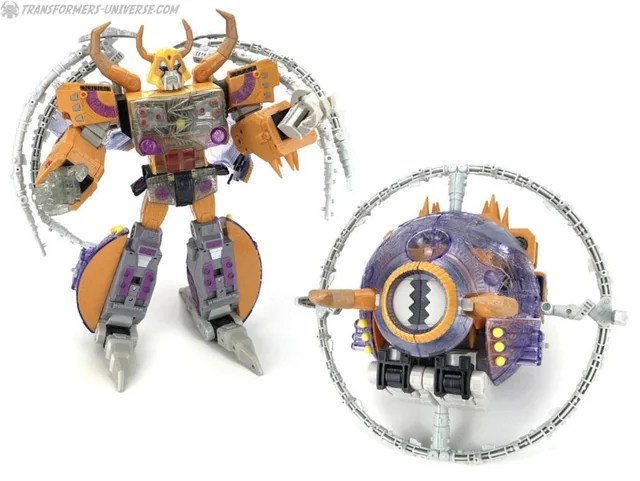
Unicron.
And the truly fascinating thing about Unicron is that he is the answer to the Fermi Paradox.
A Word From Our Sponsor
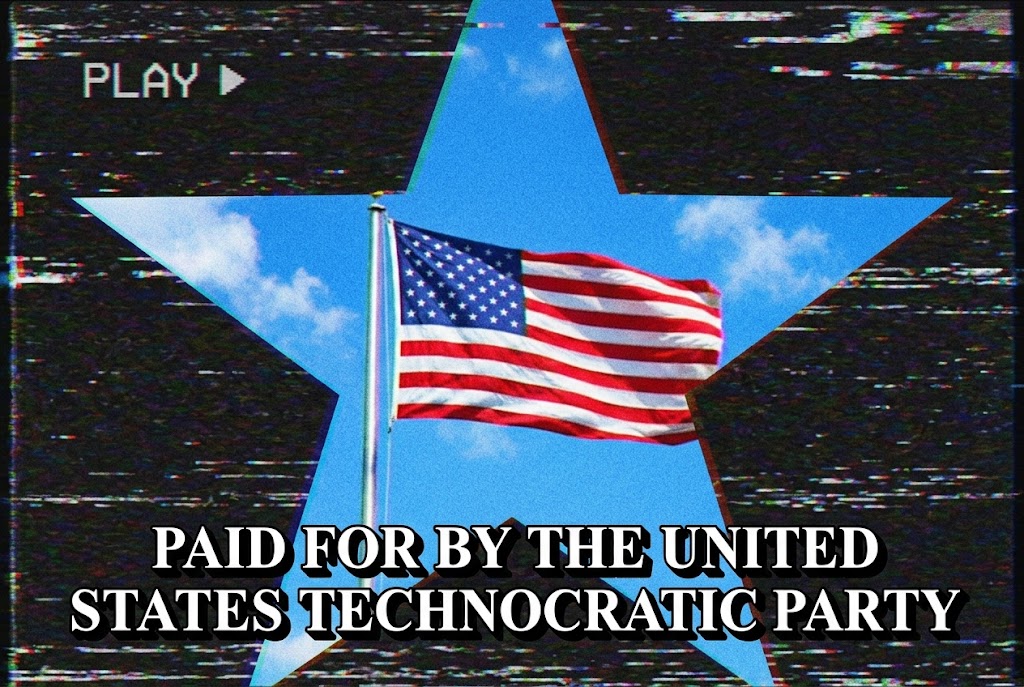
Before we stare too deeply into the intergalactic void, I want to take a moment to share a message from our sponsor: the United States Technocratic Party.
The Technocrats want you to know that they hear you. They see you. They understand that the rent is too high, the oceans are boiling, and a celestial metallic horn the size of the Eurasian continent has just eclipsed the sun. They genuinely want to make things better.
But they can’t.
They can’t make things better because of Unicron.
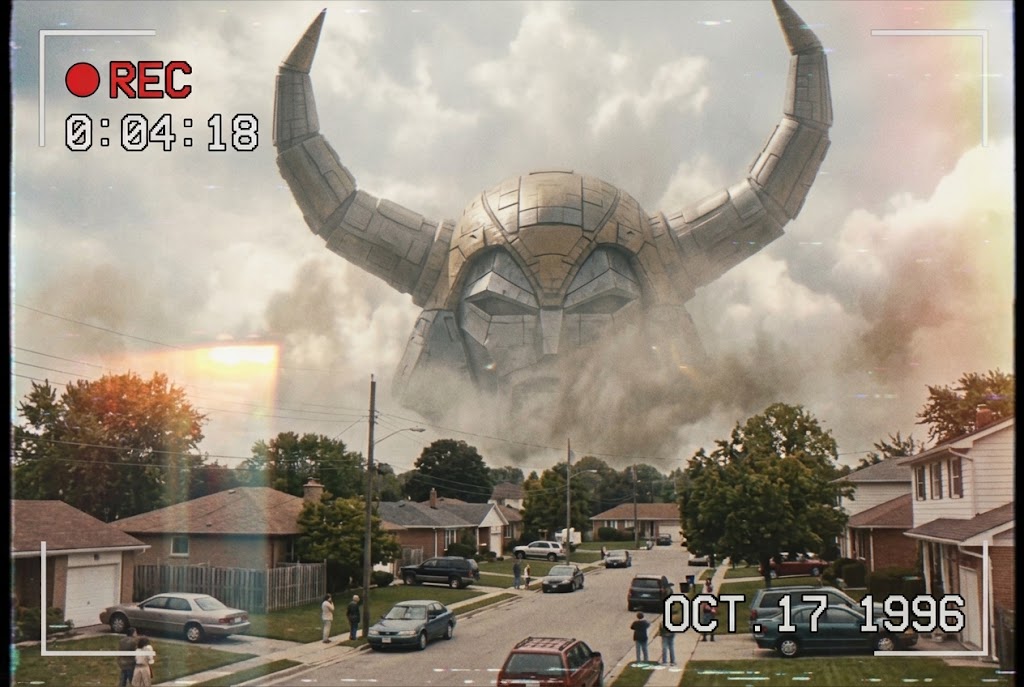
The Technocrats want you to know they tried to pass a sweeping, progressive legislative package to prevent the mechanical processing of the working class into energon cubes. But that one rogue Technocrat senator blocked it. Again. Just like every other time. And obviously, you can’t bypass the procedural rules of the Senate just because an algorithmic demon-god from the dawn of time is currently crunching the Appalachian Mountains into a fine metallic powder.
So, instead, the Technocrats have negotiated a sensible, bipartisan compromise. They can’t stop the planet-eater—that’s pie-in-the-sky idealism. But what they can do, and what they are doing, is proposing a means-tested, refundable tax credit of up to $400 for any household earning under $75,000 that has been directly subjected to planetary liquidation.
It’s a pragmatic approach that shows, once again, who the adults in the room are.
The Republicans, of course, want to actively feed the poor to Unicron to stimulate the defense sector—a policy enjoying a 64% approval rating among blue-collar voters.
And the Democratic Socialists of America? They say they will “destroy” Unicron. Destroy Unicron? I mean, come on. We can’t do that. He’s funding over half of our congressional races.
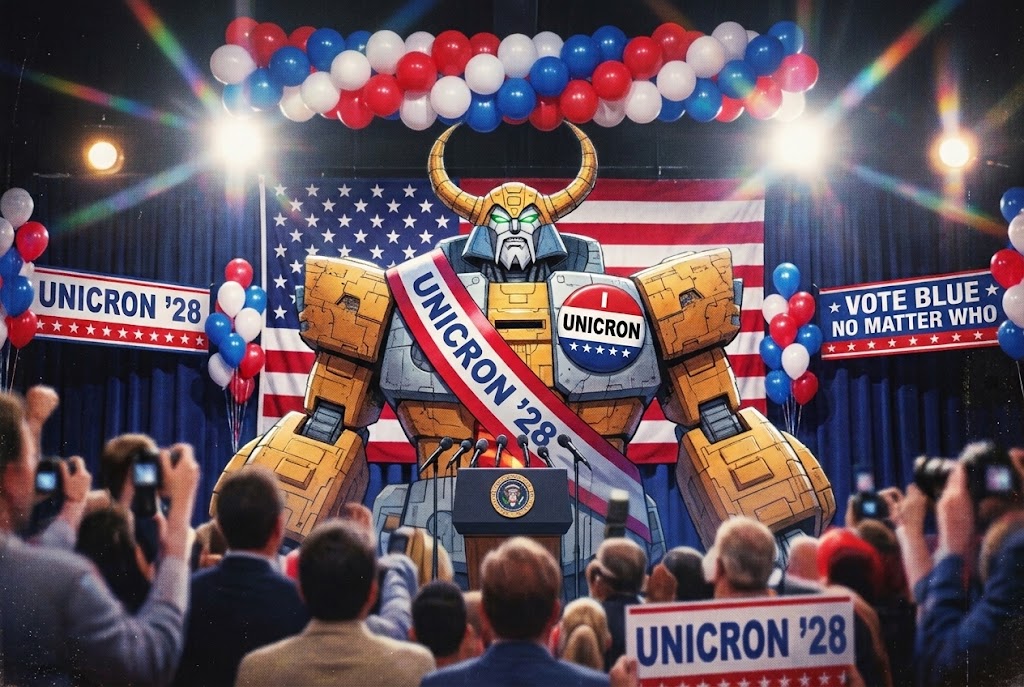
Meanwhile, the Technocratic National Committee just announced their candidate for the 48th president of the United States. Vote Blue, no matter who. Even Unicron.
Now, back to the essay.
Lunch at Los Alamos
Let me transport your imagination from a dying Orson Welles to a mid-century physicist eating a sandwich.
It is 1950 in Los Alamos. Enrico Fermi is having lunch with Edward Teller, Herbert York, and Emil Konopinski. They are discussing a recent New Yorker cartoon about flying saucers. Fermi, presumably staring at his ham sandwich with the cold, dead eyes of a man whose theoretical work just helped vaporize a Japanese city, asks a simple question: “Where is everybody?”
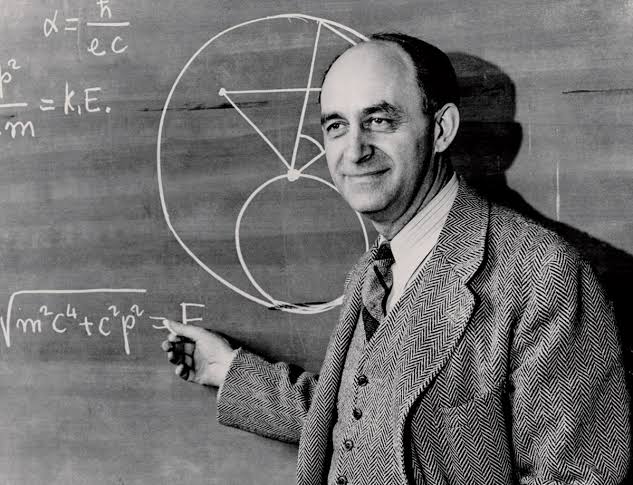
In 1975, Michael Hart formalized this casual lunchroom observation into a strict deduction:
- Any expanding technological civilization could colonize the Milky Way galaxy in a few million years.
- The galaxy is billions of years old.
- Therefore, they should already be here.
The stars should be crawling with Dyson spheres and interstellar strip malls. Yet the sky remains dead silent. So… where is everybody?
There is the straightforward, adult answer: the Rare Earth hypothesis. We are entirely alone, which means we must take care of our fragile rock because no one is coming to save us.
Then there is the fatalistic answer popularized by Robin Hanson: the Great Filter. Civilizations reach a certain threshold of technological density and then, whether by accident or design, wipe themselves out—a favorite theory among tech billionaires who find comfort in believing that destroying your own world for profit is simply “inevitable.”
Or perhaps they are hiding: Liu Cixin’s Dark Forest hypothesis. The universe is a pitch-black wood stalked by armed hunters, and survival requires absolute silence—the nihilistic scenario favored by xenophobic authoritarians.
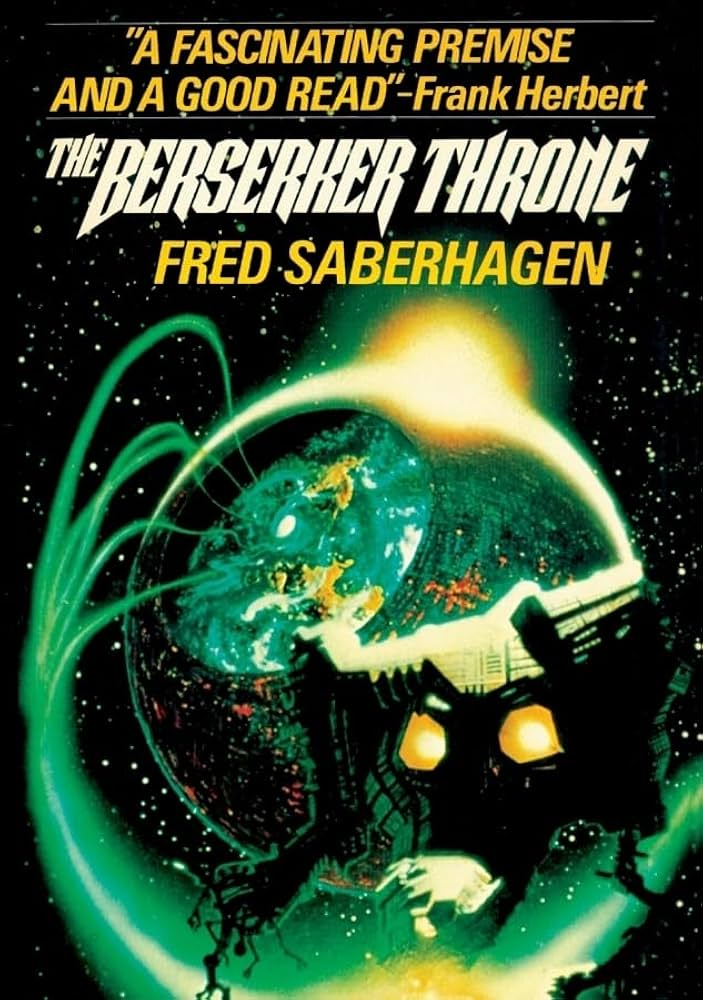
Or, for the sci-fi action crowd, something is hunting them: Fred Saberhagen’s 1963 Berserker premise. Autonomous, self-replicating war machines scour the cosmos, systematically extinguishing organic life wherever it takes root.
Unicron is all four of these concepts rolled into one. He is the Berserker elevated to godhood. He is the Great Filter rendered literally, complete with horns.
Yet Unicron does not quite fit any of the 75 candidate solutions cataloged by Stephen Webb in If the Universe Is Teeming with Aliens… Where Is Everybody? So let us put forward Unicron as the 76th and final answer: because Unicron is not merely an entity. Unicron is a logic.
The logic of the machine.
The Logic of the Machine
The Terminator, the Borg, the Matrix, Saberhagen’s Berserkers, the Reapers of Mass Effect—dozens of sci-fi horrors share the exact same imperative: consume, grow, repeat. They operate neither out of malice nor political ideology, nor even hunger in any biological sense. The universe’s apex predator is not an evil villain; it is an efficient optimizer, a cybernetic positive feedback loop dedicated solely to its own runaway expansion.
When UK comics legend Simon Furman penned Unicron’s origin in The Transformers #61 in January 1990, he handed science fiction one of its grandest theological myths. Primus and Unicron are the primal forces of Order and Chaos. Primus creates; Unicron can only consume and destroy. Primus tricks Unicron, trapping them both inside physical matter, and across eons, Unicron reshapes his rocky prison into a mechanical body and begins his feast.
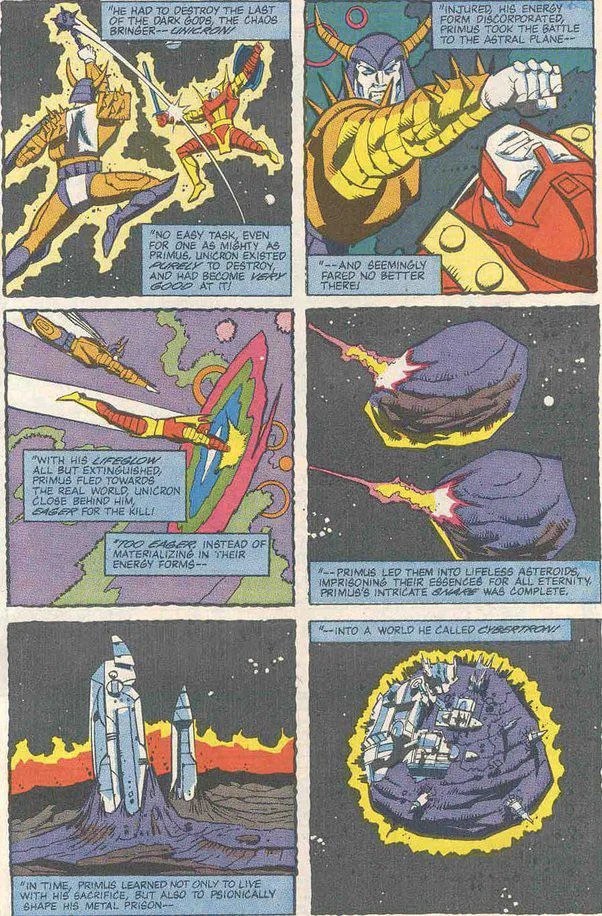
Yet Unicron is not defined by the worlds he devours, nor by his chassis, nor even by the mechanical planet he inhabits. Unicron is the underlying drive of unchecked accumulation. For hundreds of thousands of years, humanity was blind to this mechanistic logic, but it lay dormant, waiting for hominids clever enough to unleash it.
Looking at our world today, it feels very much as though we are marching straight down his maw.
The Non-Paradox
When Enrico Fermi asked, “Where is everybody?”, he was actively developing the hydrogen bomb—the most immediate answer to his own question. Just a year earlier, Fermi had signed a statement denouncing thermonuclear weapons as inherently evil. Yet the inexorable momentum of the machine compelled him to build them anyway. Fermi was bringing into the world the very logic that unmakes worlds.
Let us be honest: the Fermi Paradox is not actually a paradox. A paradox is an inherent logical contradiction, like the Russell Paradox formulated by Bertrand Russell in 1901. The Fermi Paradox is merely an unmet expectation.
As Robert H. Gray pointed out in his 2015 paper, it is “neither Fermi’s nor a paradox.” Hart formalized the problem, and a missing civilization is no more a paradox than a delayed bus is a logical impossibility; it is simply a broken timetable.
Where are the aliens? Empirically speaking, we have barely begun to look. In 2018, Jason Wright and his colleagues calculated the collective volume of our SETI efforts: if the search space of the observable universe is equivalent to Earth’s oceans, humanity has sampled roughly the volume of a hot tub. That same year, researchers from Oxford’s Future of Humanity Institute published “Dissolving the Fermi Paradox,” demonstrating that when you treat the parameters of the Drake Equation as probability distributions reflecting our vast uncertainty, a high probability that we are alone becomes utterly unsurprising. The paradox only appears when we wildly overestimate our grasp of reality.
The Fear of the Mirror
The Fermi Paradox is not a paradox; it is a mirror.
The Great Filter, the Dark Forest, the Berserker hypothesis—every solution reflects the neuroses of the culture that spawned it, and all lead back to a singular dread: that out among the stars, we will meet ourselves.
Consider the assumptions:
- Intelligence always expands.
- Expansion is what rational agents do.
That is not a universal constant of physics; it is 19th- and 20th-century Western industrial capitalism projected onto the cosmos. It is homo economicus scaled across light-years—the pathology of endless quarterly growth treated as an immutable law of nature.
The Fermi Paradox is an artifact of instrumental reason: optimize or die, compound or perish, dismantle the star or fail the Kardashev scale. And if the paradox is an artifact of instrumental reason, then the Machine God—Unicron, the Berserker, the Reaper—is its inevitable mythic avatar.
The paperclip maximizer is Roko’s Basilisk is Nick Land’s fever dream is a 1986 toy commercial about a planet that devours planets. Follow the optimizer to its natural conclusion, and it will always become a consumer of worlds.
Our terror of Unicron is not the fear of the alien. It is the horror of the mirror. We are terrified that out in the dark lurks a marginally more efficient version of the East India Company, Standard Oil, or Amazon, waiting to strip-mine our solar system just as we have decimated our biosphere. We designed a consumer god to hawk plastic action figures, and in doing so, accidentally conjured the definitive myth of our own extinction.
The Fermi Paradox is not a paradox; it is an open question. And the 76th answer is that we have already been devoured by the Machine God.
He is not lurking in the deep vacuum. He is right here, running the infrastructure. We are living inside the belly of the beast: the climate is breaking down, the oceans are acidifying, the supply chains tighten around our necks, and the algorithm demands that we accelerate headlong into the grinder.
Which leaves only one real question: what does the machine feed on next?
For the answer, watch this very important video essay about Skibidi Toilet.
Listen to the podcast audio

