The hidden meaning of Blade Runner 2049 + Extended Addendum

Many creators have contributed to the Blade Runner mythos. Philip K Dick’s original novel and the directorial talents of Ridley Scott and Denis Villeneuve are widely recognised. But the screenwriter of the Blade Runner movies provided their mythic magic – Hampton Fancher.

Fancher encoded the Blade Runner mythos with psychological symbols drawn from the work of Carl Jung and Sigmund Freud. The first Blade Runner uses Freud’s concepts of the Doppelganger and the Other. Blade Runner 2049 is structured around the Persona, Shadow, Anima and Self – Jung’s Archetypes of the Unconscious.

This episode of the Science Fiction podcast re-publishes The Hidden Meaning of Blade Runner 2049, with an extended addendum on archetypal storytelling, answering some of the most frequently asked questions arising from the original essay.

00:00 An addendum to my most questioned essay
01:56 Thank to members of the Science Fiction podcast
04:42 Why archetypes?
06:43 Where does Gandalf live?
09:10 All of these stories are within you
12:29 Switching of the psychological architecture of our self
15:00 Mapping the Unconscious
23:16 Story is the gateway to the Unconscious
26:42 The Archetypes of the Unconscious
34:39 Blade Runner and BR 2049
39:30 The spiritual experience of stories

Watch the original video essay: https://www.youtube.com/watch?v=P5fbQ4hf068

Follow the Science Fiction podcast: https://damiengwalter.com/podcast/

Join the Science Fiction community: https://www.facebook.com/groups/324897304599197

Listen to the storytelling of Clarissa Pinkola Estes: https://amzn.to/36Njm81

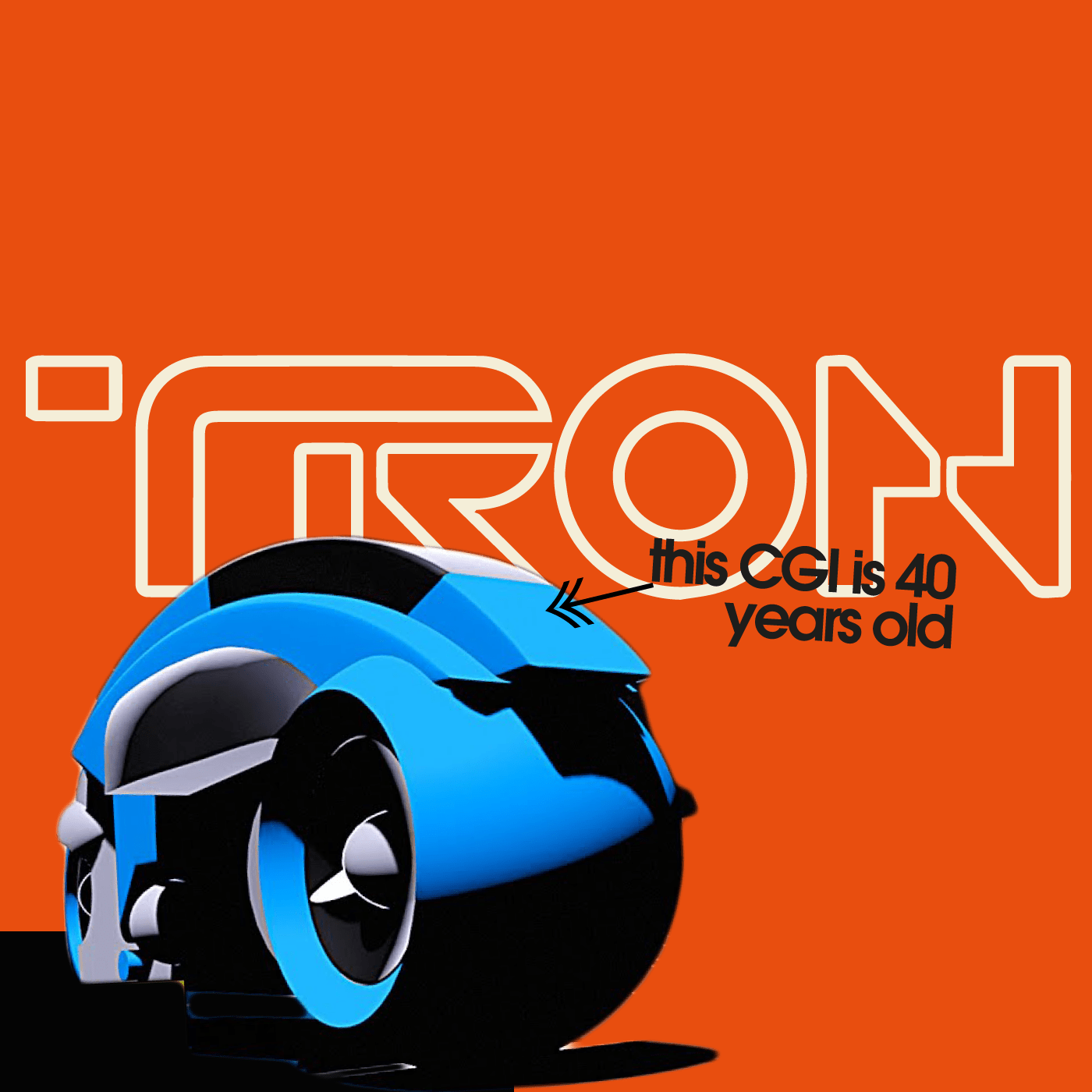
The light cycles of TRON still look like the future

In retrospect, TRON was the moon mission for CGI. A project of questionable value in itself, with the real aim of advancing the technology. Honestly, I can’t remember much about the story of TRON. But boy, those light cycles! Those are seared into my long-term memory from childhood. And they still look amazing 40 years on.

Follow the the Science Fiction podcast and become a member https://damiengwalter.com/podcast/

Join the discussion on the Science Fiction community https://www.facebook.com/groups/324897304599197

Read my top science fiction to rewire your consciousness https://amzn.to/3gQqfGR

The true history of science fiction

“With Jules Verne and the publisher Hugo Gernsback, H.G. Wells invented the genre of science fiction.” Tweet by @nytimesbooks, November 2021

A badly worded tweet by the New York Times revealed a deep anger at the false history of science fiction. Written out of that history were hundreds of women writers of the 1800s who created what today we call science fiction.

The true history of science fiction is deeper and richer than many fans and readers know. It reaches back to the Enlightenment and the collapse of belief in the Christian mythos. It is the search for a new mythos for the modern world, that continues into the 21st century.

00:00 The forgotten authors of science fiction
02:30 Welcome to the Science Fiction podcast
07:07 The true history of science fiction…why does it matter?
09:21 Commercial Genre vs Creative Movement
17:12 The Problem : the collapse of the Christian mythos
23:36 All science fiction is myth, not all myth is science fiction
26:38 The seeds of science fiction
29:01 The Novel Experiment
36:20 Birth of Genre
38:41 The ideological capture of science fiction by John W Campbell
43:47 The New Mythic
50:01 The process of genrefication
54:44 Writing the 21st century myth

Follow the the Science Fiction podcast and become a member https://damiengwalter.com/podcast/

Join the discussion on the Science Fiction community https://www.facebook.com/groups/324897304599197

Read my top science fiction to rewire your consciousness https://amzn.to/3gQqfGR
Pre-1950 Utopias and Science Fiction by Women https://digital.library.upenn.edu/women/_collections/utopias/utopias.html

Rendered Reality : further thoughts on the Unreal

What is reality?

For tribal societies reality was birthed from a great mother. For agrarian peoples it grew from a seed. And for our modern, industrial world reality started with an explosion.

Now as our society transforms into a post-modern, post-industrial world our model of reality is changing again. To a reality made of data, information and computation.

And at the heart of this new model of reality is…you! The render engine of your own reality.

Watch the video version of this episode here https://youtu.be/4TFSu_db7fg

Follow the Science Fiction podcast https://damiengwalter.com/podcast/

The work of Marco Di Lucca https://www.artstation.com/marcodilucca

Follow the Science Fiction podcast https://damiengwalter.com/podcast/

00:00 Real or rendered?
02:13 The work of Marco Di Lucca
04:20 Mata 3D, Unreal Engine, Metahuman
09:07 Isn’t this what art has always done?
12:27 Crossing a threshold into the Unreal
15:33 Welcome to Rendered Reality
17:31 The reification of reality
19:25 What is rendering?
24:00 The cultural mythos of reality
33:53 Our new digital mythos
40:04 The mythic cycle
49:01 You are the render engine of reality

Lord of the Rings and the fascist fantasy

Fascism lures people in with a fantasy of return to older, better times. A golden age before the modern world. Nazi Germany had the fantasy of the Third Reich and the Ubermensch. Today the Russia of Vladimir Putin has a fantasy of a Eurasian Empire and the Return of the Tsar.

Critics of Lord of the Rings sometimes compare JRR Tolkien’s fantasy to the fantasies of fascism. Is Lord of the Rings a fascist fantasy? Or did Tolkien create a mythos beyond the understanding of his critics?

00:00 An alternate history of England
03:59 Welcome to the Science Fiction podcast
07:17 The rise of a fascist fantasy
10:09 Is LotR a fascist fantasy?
11:54 Premodern, Modern, Postmodern
13:45 The pre-modern fantasy
17:15 The synthetic fantasy of fascism
21:51 The fascist fantasy in 2022
27:22 The Return of the King
33:22 The bit people who are angry at the title should listen to first
34:23 The modern vision of scifi
38:51 The postmodern vision of transhumanism
43:22 A mass retreat to the premodern
47:24 LotR as integrated mythos
52:33 LotR as a call for WISDOM
56:16 LotR as path into the Unreal

Follow the the Science Fiction podcast https://damiengwalter.com/podcast/

Join the discussion on the Science Fiction community https://www.facebook.com/groups/324897304599197

Read my top science fiction to rewire your consciousness https://amzn.to/3gQqfGR
A science fiction history of World War 3

Humankind had it within our grasp to become a K1 civilization, the first stage of the Kardashev scale. But we allowed K1 to slip through our fingers. As the scientist Carl Sagan argued, much of 20th century history can be understood as the effort, and failure, to achieve K1. Today that failure has returned us to the threat of World War 3, as Russia invades Ukraine. How did we miss our chance at K1? And how can we still become a K1 civilization?

Follow the the Science Fiction podcast https://damiengwalter.com/podcast/

Join the discussion on the Science Fiction community https://www.facebook.com/groups/324897304599197

Read my top science fiction to rewire your consciousness https://amzn.to/3gQqfGR

Severance – what does it mean?

Severance is sophisticated science fiction for grown up audiences in the style of J G Ballard, Philip K Dick or Haruki Murakami. But what does it mean?

Follow the the Science Fiction podcast https://damiengwalter.com/podcast/

Join the discussion on the Science Fiction community https://www.facebook.com/groups/324897304599197

Read my top science fiction to rewire your consciousness https://amzn.to/3gQqfGR
Ted Chiang’s devastating critique of artificial intelligence

AI research plays a sleight of hand trick. It states that human intelligence is emergent from matter. Then it claims that “artificial” intelligence can be treated as less than human because it is emergent from matter. It’s the trick that allows us to treat AI as machines, rather than as life.

Ted Chiang’s The Lifecycle of Software objects extrapolates the hard determinist understanding of intelligence to its inescapable, logical conclusion. That the intelligence which AI research brings into the world will be inextricable from life. And that we will be compelled not to enslave our AI creations, but to care for them.

The outcome is among the greatest science fiction stories ever written.

Follow the the Science Fiction podcast https://damiengwalter.com/podcast/

Join the discussion on the Science Fiction community https://www.facebook.com/groups/324897304599197

Read my top science fiction to rewire your consciousness https://amzn.to/3gQqfGR
Buy ALL of Ted Chiang’s books…right now! https://amzn.to/3h35NCZ

We must save JRR Tolkien from Jeff Bezos

The scouring of the Shire is the most beloved part of The Lord of the Rings for many lovers of Tolkien. A coda to the novel’s main story, where the hobbits who defeated Sauron now have to take back the very thing they went to war to protect, their home, the Shire.

JRR Tolkien was a “High Tory”, who loved tradition and loved humanity, and hated the powers of industrialisation and commercialisation he saw overrunning the world. What a shame it is then that his great myth has been sold out to Amazon, and Jeff “Sharkey” Bezos.

Maybe it’s time for those who are his fans to scour JRR Tolkien of those turning his work into a corporate entertainment franchise.

Follow the the Science Fiction podcast https://damiengwalter.com/podcast/

Join the discussion on the Science Fiction community https://www.facebook.com/groups/324897304599197

Read my top science fiction to rewire your consciousness https://amzn.to/3gQqfGR

An interview with Adam Roberts

“It’s trying to thread that needle between the wonder and the splendour in this mythology without being beguiled into actual fascism.” ~Adam Roberts

Adam Roberts is a professor of nineteenth century literature, a prolific essayist and critic, and one of our best science fiction writers. Our interview traces a path between two powerful forces in science fiction – the mythic stories of transcendence and self fulfilment that animate much of today’s most popular sci-fi storytelling, and the mundane and ordinary lives that ground our reality.

We touch on the shifting perception of science fiction in academia, questions of worldbuilding and the endless argument to define science fiction, the new optimism of hopepunk and solarpunk, HG Wells long fascination with eugenics, the balance between stereotype and archetype in storytelling, and professor Roberts answer to the question of where science fiction began. It’s a great insight into the thinking of a great SF author.

00:00:00 A mistrust of myths
00:01:51 An interview with Adam Roberts
00:04:39 The professor’s productivity tips
00:08:11 The nineteenth century and science fiction
00:11:03 Has the academic perception of science fiction shifted?
00:14:29 The worldbuilding question
00:19:16 Why do we keep arguing about the definition of science fiction?
00:23:39 We spend more money on Star Wars than space travel
00:32:12 Melding the literary and the sci-fi
00:42:49 The process of writing science fiction
00:48:03 Translating Joyce and algorithmic writing
00:59:50 Hopepunk and Solarpunk
01:11:22 The Community vs. the Individual
01:18:03 The Heroic and the Quotidian
01:28:02 A segue to Wellsian scholarship
01:35:01 Emmanuel Kant and the Fermi paradox
01:44:24 Tolkien and the English mythos
01:49:47 Stereotype vs Archetype
01:57:14 When does science fiction begin?

Become a member of the Science Fiction podcast: https://damiengwalter.com

Join the discussion on the Science Fiction community https://www.facebook.com/groups/324897304599197

Read the novels of Adam Roberts https://amzn.to/3LjUfZQ

The Critical Drinker is not a critical thinker

The Critical Drinker blames the failure of new Star Wars movies on the “deconstruction” of traditional heroic storytelling. It’s a typically reactionary position that is ignorant of amazing storytellers who base their stories on deconstruction like Alan Moore, Iain M Banks and Terry Pratchett. It’s clear that the Critical Drinker is not a critical thinker. But the problems with reactionary reviewers go much deeper.

00:00 Culture is not your friend
04:45 The critic vs the reviewer
08:59 The Critical Drinker is not a critical thinker
10:15 Gamergate and video game addiction
13:08 Reactionary reviewers celebrate addictions
15:36 Star Wars is the Big Mac of culture
19:07 The Hero’s Journey is a tribal war story
21:24 The British deconstruction of scifi and fantasy
31:47 Only the critical thinker can escape the power of culture

Follow the Science Fiction podcast https://damiengwalter.com

Join the discussion on the Science Fiction community https://www.facebook.com/groups/324897304599197

Why are atheists angry? Raised by Wolves

Raised by Wolves is a remarkable work of symbolic science fiction…for exactly 2 episodes. As soon as master storyteller Ridley Scott departs the show crashes harder a nosediving colony vessel into absurdity. Let’s hope season 2 can do better. But in those early episodes Raised by Wolves sets up a symbolic narrative exploring the conflict of Faith vs. Atheism. And asks the important question…is atheism just another system of belief?

00:00 The angel of Atheism
00:56 Intro to the Science Fiction podcast
06:42 Terms of discussion – steelman the argument
07:58 The Dialectic vs. the Didactic
11:21 Symbolic storytelling in science fiction
16:07 Ridley Scott’s Repli-verse
23:00 The symbolism of Raised by Wolves
31:28 So…why ARE atheists angry?

Follow the Science Fiction podcast – https://damiengwalter.com/podcast/

Support serious sci-fi as a member – https://damiengwalter.com/members/

Join the discussion on the Science Fiction community: https://www.facebook.com/groups/324897304599197

Read H G Wells masterpiece of symbolic science fiction -https://amzn.to/3o6qt0I